Discover the incredible benefits of hip bridges and learn the correct form. Strengthen your core and glutes simultaneously, enhancing full-body stability. This guide offers practical tips, variations, and precautions for everyone from beginners to advanced fitness enthusiasts.

Unlock Full-Body Stability: The Transformative Power of Hip Bridges
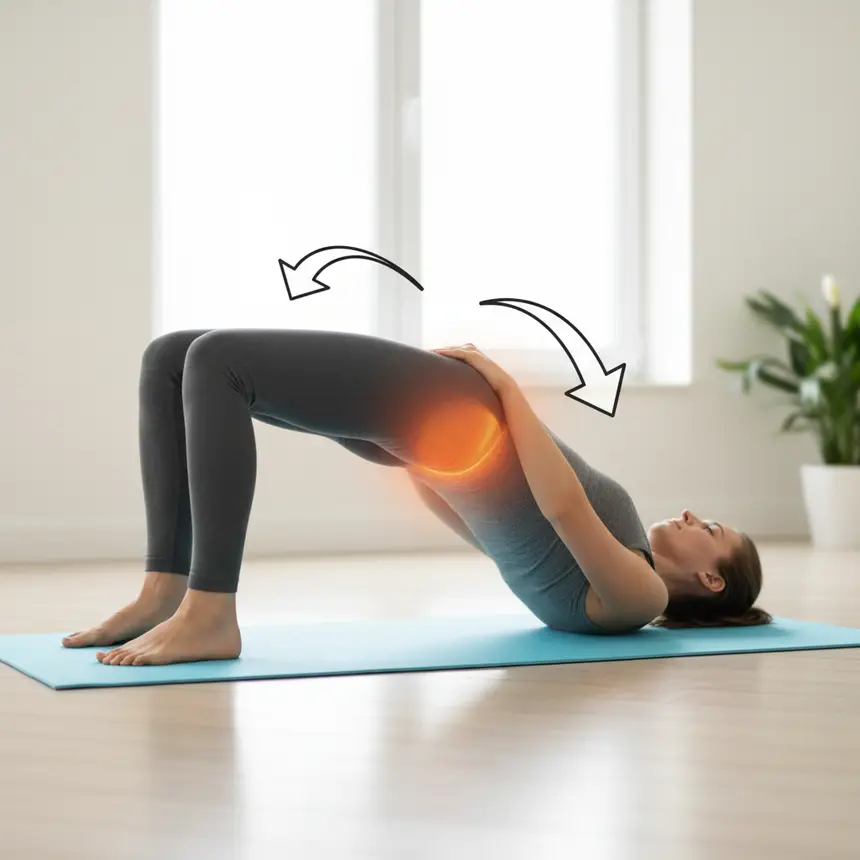
The hip bridge, a seemingly simple exercise, is a powerhouse for engaging multiple key muscle groups simultaneously, delivering remarkable benefits for your overall well-being. Primarily renowned for its ability to sculpt and strengthen the gluteal muscles, this exercise also actively recruits your core and hamstrings, significantly enhancing lower body stability. For many of us who spend prolonged hours sitting, hip bridges are crucial for awakening dormant glute muscles and fortifying the muscles surrounding the lumbar spine, leading to substantial improvements in everyday posture. Consistent practice can boost your balance during walking and establish a foundational strength that elevates your performance in more complex movements. Furthermore, promoting stable spinal movement can indirectly contribute to alleviating common lower back discomfort.
From Foundation to Advanced: Hip Bridge Techniques Explained
Let's explore the fundamental form and various modifications to ensure you're getting the most out of your hip bridge.
1. The Basic Hip Bridge:
2. Progression and Variation:
1. The Basic Hip Bridge:
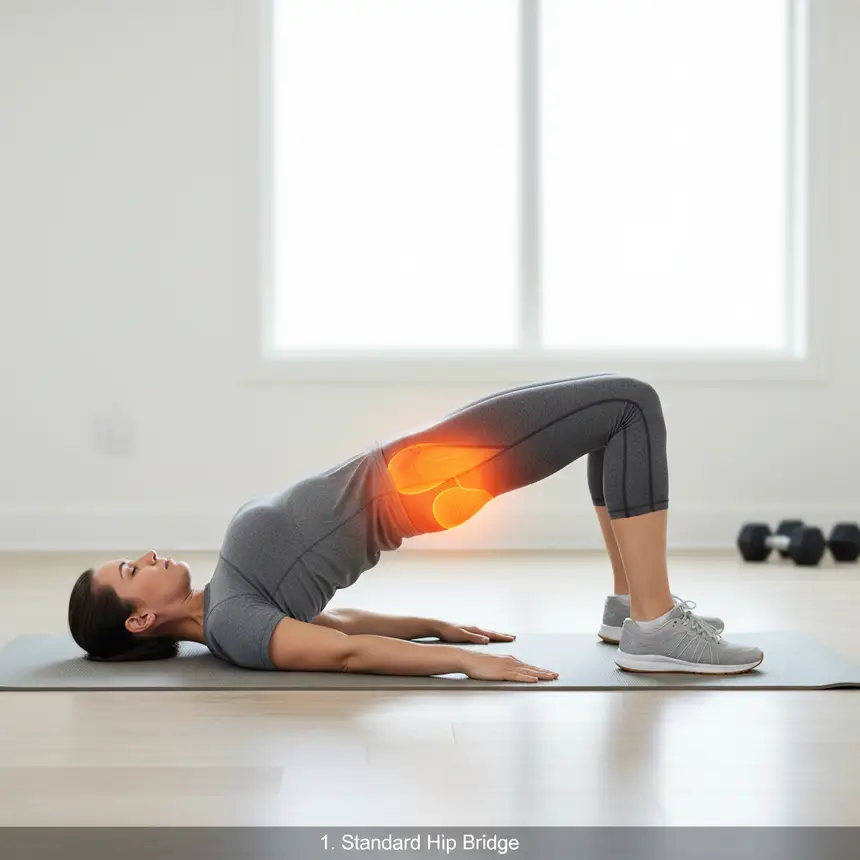
- Begin by lying on your back with your knees bent and feet flat on the floor, about shoulder-width apart. Position your heels close enough to your glutes so you can almost touch them with your fingertips.
- Rest your arms at your sides with palms facing down.
- Engage your abdominal muscles, then slowly lift your hips off the floor. The goal is to create a straight line from your knees through your hips to your shoulders. Be mindful not to hyperextend your lower back.
- At the peak of the movement, squeeze your glutes intensely and hold for a brief moment.
- Slowly lower your hips back down to the starting position, articulating each vertebra onto the floor, with your tailbone being the last part to touch.
- A common breathing pattern is to exhale as you lift your hips and inhale as you lower them.
2. Progression and Variation:
- Calf Raise Bridge: Perform the basic hip bridge but push up onto the balls of your feet, engaging your calves and ankles more intensely. Ensure even pressure across all your toes.
- Single-Leg Hip Bridge: From the basic position, lift one leg, bending the knee to a 90-degree angle. Then, perform the hip bridge using only one leg. Focus on keeping your hips level and preventing any rotation or tilt, which significantly challenges individual glute strength and core stability.
※ This post contains affiliate links. I may earn a commission at no extra cost to you.

Your Action Plan: Integrating Hip Bridges into Your Fitness Routine
Here’s a practical guide to effectively incorporate hip bridges into your daily life and maximize their benefits.
1. Consistent Integration: Aim to include hip bridges in your workout routine 2-3 times per week, perhaps as part of your leg day or as a finishing exercise for a full-body workout. A common recommendation is 3 sets of 10-15 repetitions. Beginners should start with fewer reps and gradually increase as strength builds.
2. Mind-Muscle Connection: During each repetition, actively focus on feeling your glute muscles contract and relax. This conscious engagement, rather than just going through the motions, is key to maximizing the exercise's effectiveness. Using a mirror to check your form can also be very helpful.
3. Progressive Overload: As you get stronger, challenge yourself by increasing the number of repetitions or sets. You can also advance to more challenging variations like the single-leg hip bridge. If appropriate, adding a light weight plate across your hips or using a resistance band around your knees can further increase the resistance. Always prioritize safety and ensure the progression matches your current fitness level.
1. Consistent Integration: Aim to include hip bridges in your workout routine 2-3 times per week, perhaps as part of your leg day or as a finishing exercise for a full-body workout. A common recommendation is 3 sets of 10-15 repetitions. Beginners should start with fewer reps and gradually increase as strength builds.
2. Mind-Muscle Connection: During each repetition, actively focus on feeling your glute muscles contract and relax. This conscious engagement, rather than just going through the motions, is key to maximizing the exercise's effectiveness. Using a mirror to check your form can also be very helpful.
3. Progressive Overload: As you get stronger, challenge yourself by increasing the number of repetitions or sets. You can also advance to more challenging variations like the single-leg hip bridge. If appropriate, adding a light weight plate across your hips or using a resistance band around your knees can further increase the resistance. Always prioritize safety and ensure the progression matches your current fitness level.
Safety First: Common Pitfalls and Who Should Bridge
While hip bridges are generally safe, maintaining proper form and listening to your body's signals are paramount.
1. Important Precautions:
2. Ideal Candidates for Hip Bridges:
1. Important Precautions:
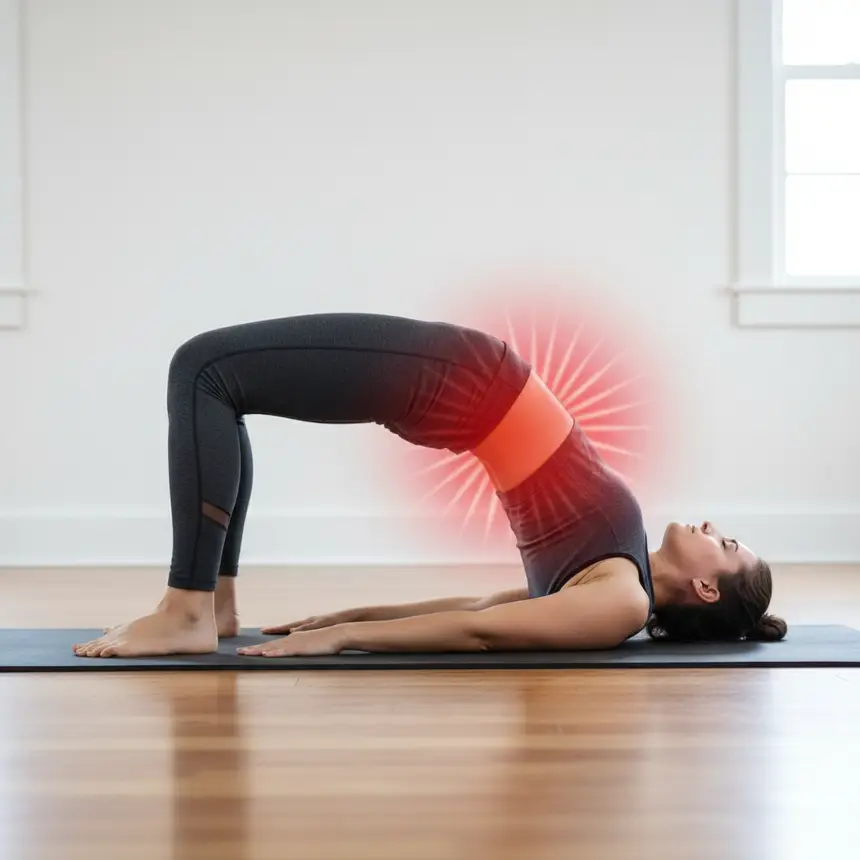
- Lower Back Pain: If you lift your hips too high or fail to engage your core, you might hyperextend your lower back, leading to discomfort. If you feel any strain in your back, reduce the height you lift your hips or pause the exercise to reassess your form.
- Neck and Shoulder Tension: Be mindful not to strain your neck or shoulders. Keep your gaze directed upwards towards the ceiling to maintain a neutral cervical spine.
2. Ideal Candidates for Hip Bridges:
- Individuals seeking to strengthen and tone their glutes: Particularly effective for those with underactive gluteal muscles.
- Anyone aiming to improve core stability: It simultaneously strengthens the abdominal and lower back muscles, enhancing your body's central stability.
- People experiencing postural imbalances or mild lower back discomfort: By fortifying weakened glutes and core, it can aid in postural correction and discomfort relief.
- Fitness beginners: The movement is relatively simple, performed on the floor, and carries a low risk of injury, making it an excellent starting point for those new to exercise.
Frequently Asked Questions
Q. Is it okay to do hip bridges every day?
A. While hip bridges are a low-impact exercise, your muscles still need time to recover. It's generally more effective for muscle growth and injury prevention to perform them about 3-4 times a week, allowing for adequate rest in between sessions.
Q. I feel more activation in my hamstrings during hip bridges. Is that normal?
A. Yes, that's completely normal. Hip bridges engage both your glutes and hamstrings. If you feel excessive hamstring activation, try adjusting your foot placement a little closer to your glutes or focus more intently on squeezing your glute muscles to ensure they are the primary movers.
Q. Can hip bridges help with lower back pain?
A. Hip bridges can help strengthen weakened glutes and core muscles, which in turn can improve stability around your lower back. This can indirectly contribute to alleviating some types of lower back pain. However, if your pain is severe or persistent, it's crucial to consult a healthcare professional.
Q. What's the difference between a hip bridge and a hip thrust?
A. A hip bridge is performed lying flat on the floor, while a hip thrust typically involves elevating your upper back on a bench or box. Hip thrusts offer a greater range of motion and allow for heavier loading, providing a more intense glute workout. Hip bridges are often better for beginners, while hip thrusts are for those ready for higher intensity and weight.