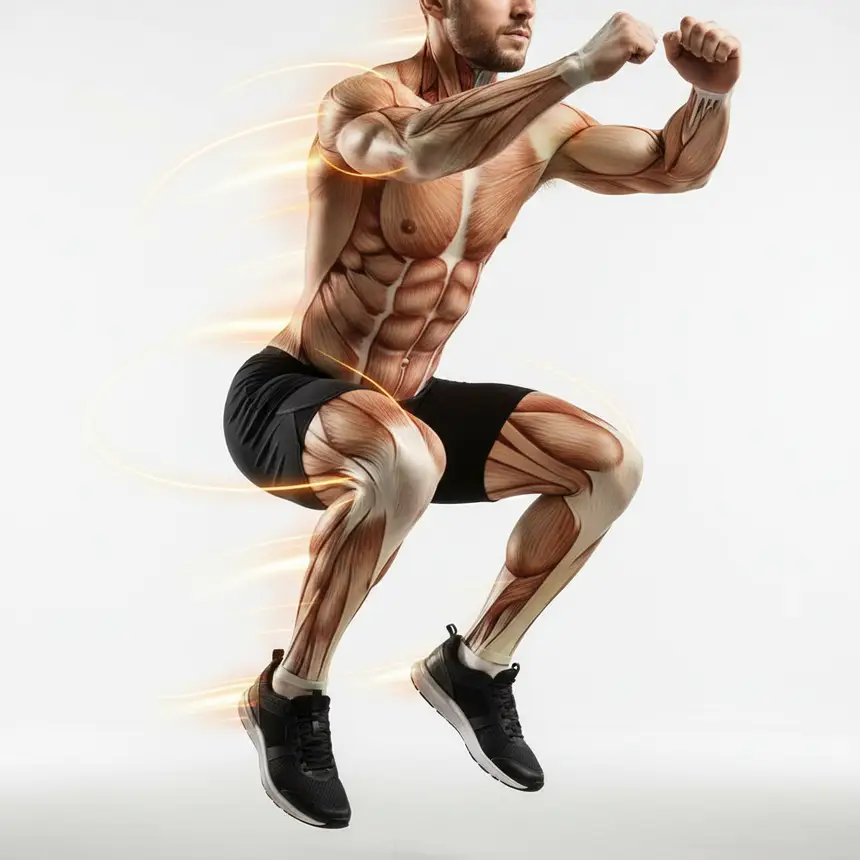
Struggling with rounded shoulders and stiff hips? This guide delves into the causes of postural imbalances, providing practical exercises for shoulder stability, hip mobility, and core strength, along with daily tips to help you regain healthy, fluid movement.

Are You Experiencing Rounded Shoulders and Persistent Hip Stiffness?
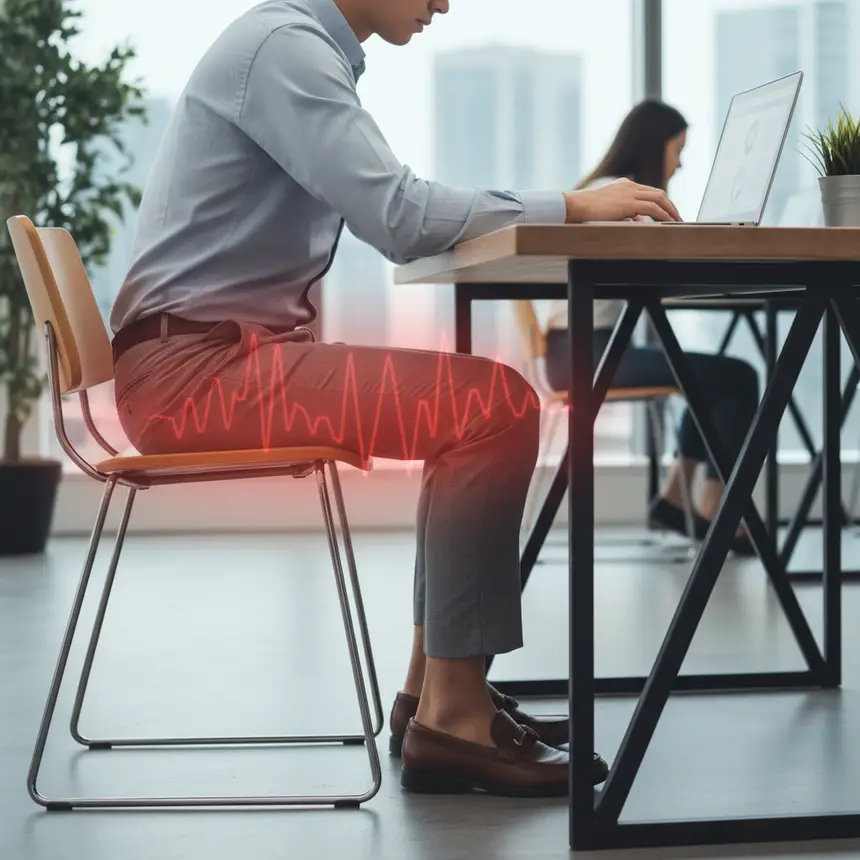
Many of us grapple with postural imbalances, a common byproduct of our modern lifestyles. Extended periods of sitting or constant smartphone use place considerable strain on crucial body links like our shoulders and hips. If you've woken up with sore shoulders or felt discomfort in your hips while climbing stairs, it might be more than just fatigue. Do you find raising your arms overhead more challenging than before, or does spreading your legs sideways feel unnatural? These are vital signals your body is sending. Today, we'll delve into the root causes of these discomforts and explore practical core strengthening exercises and full-body movements designed to restore healthy, pain-free motion.
What's Behind Your Shoulder and Hip Discomfort?
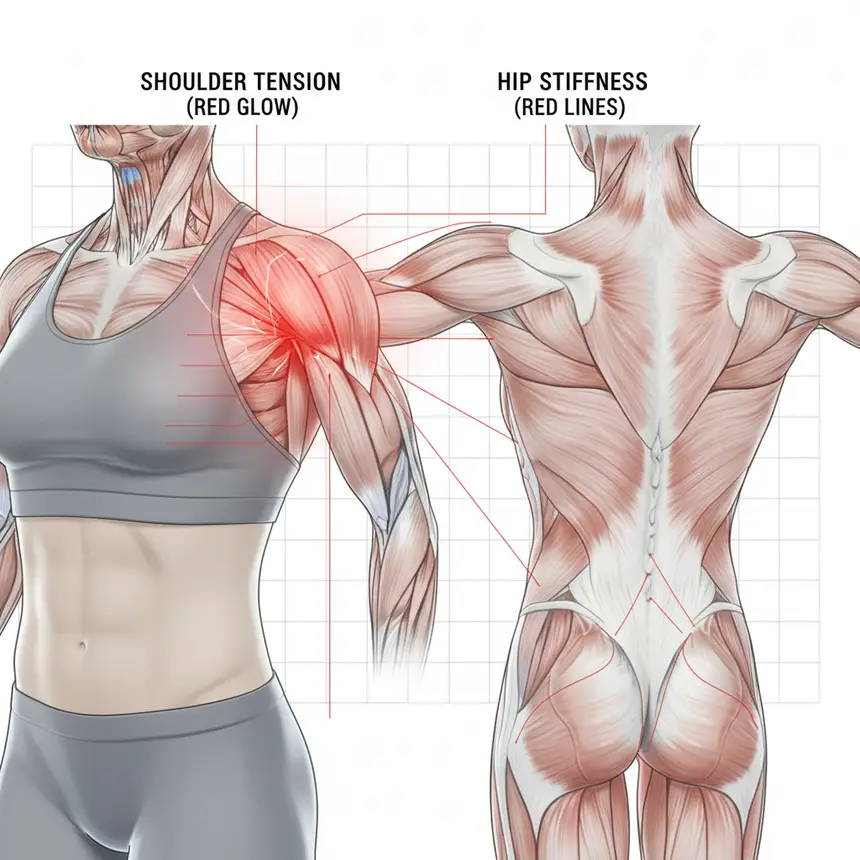
Most postural issues stem from a chain reaction within the body. Rounded shoulders, for instance, often arise from weak upper back muscles coupled with overly tight chest muscles. This isn't merely an aesthetic concern; it can severely restrict your arm's range of motion, potentially causing pain even with minor movements. Imagine spending hours hunched over a computer—this posture naturally encourages your back to round and shoulders to roll inward. Similarly, restricted hip movement weakens the connection between your lower body and core. The hips are the central pivot for all lower body actions like walking and running, and reduced flexibility here can force surrounding muscles to overcompensate or underperform. If lifting one leg or moving it sideways feels difficult, it's a strong indicator of muscle imbalance around the hip joint. Such imbalances compromise overall stability and reduce exercise efficiency.
※ This post contains affiliate links. I may earn a commission at no extra cost to you.

Targeted Exercises for Shoulder Stability, Hip Flexibility, and Core Strength
To effectively address postural imbalances and discomfort, a holistic approach is more beneficial than focusing solely on isolated areas.
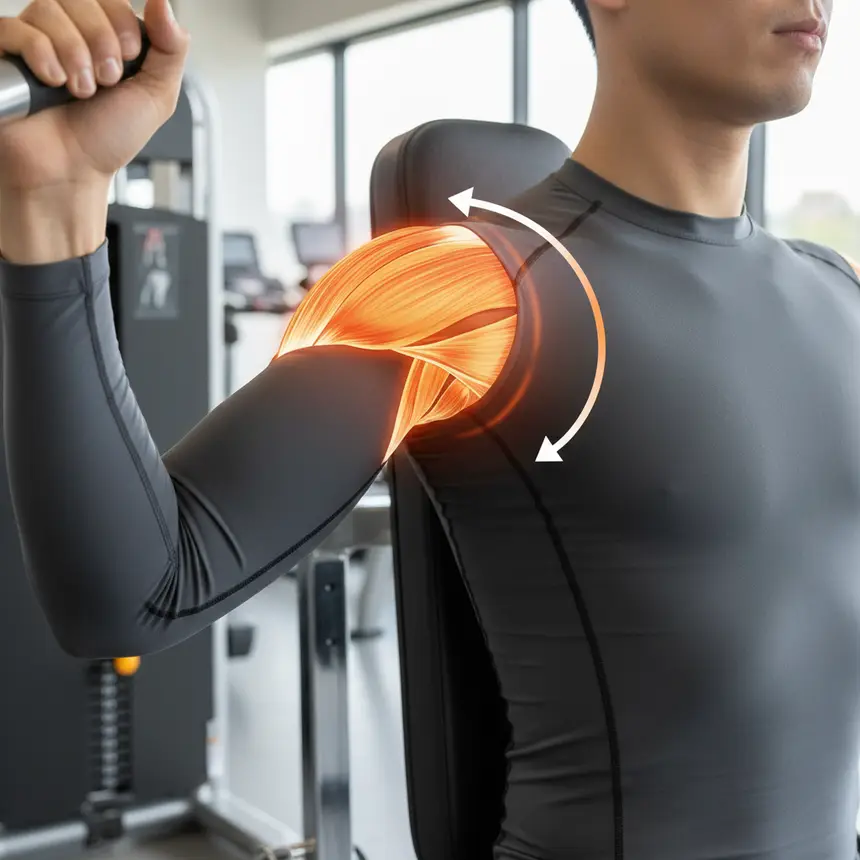
- Shoulder Stabilization Drills: If your shoulder movement is restricted, prioritize precise movements within a pain-free range over attempting a wide range of motion. For instance, when performing an overhead press on a machine, avoid letting your elbows go excessively far back. Instead, keep your elbows aligned with your shoulders, moving only within that controlled plane. The goal is to feel muscle engagement, not to lift heavy weights.
- Hip Mobility Enhancement: Activating lateral hip movement is key. Try this: while standing, slowly lift one leg sideways without bending your knee. Repeat this motion. Initially, you might struggle with balance or have limited range, but consistent practice will improve flexibility. Incorporating a foam roller to release tension in the muscles around your hip joint can also be very effective.
- Core Muscle Activation: The 'moving plank' is excellent for deeply strengthening your core. Start in a plank position with your forearms on the floor. Keeping your torso stable, use your elbows to push off the floor, sliding your body slightly forward and backward. Crucially, prevent your lower back from sagging or your hips from rising too high; maintain abdominal tension throughout. A strong core contributes significantly to both shoulder and hip stability, making its consistent training essential.
Practical Tips for Integrating Healthy Movement into Your Daily Life
Exercise isn't confined to the gym; small adjustments in your daily routine can lead to significant improvements.
1. Distinguish Between Pain and Soreness: If you feel a sharp, stabbing, or electric sensation that prevents you from continuing an exercise, that's 'pain'—stop immediately. However, if you feel a dull ache or a satisfying burn during muscle contractions or stretches, that's 'muscle soreness,' a good sign that your muscles are working and can be overcome with consistent effort. Understanding this distinction is crucial for safe and effective training.
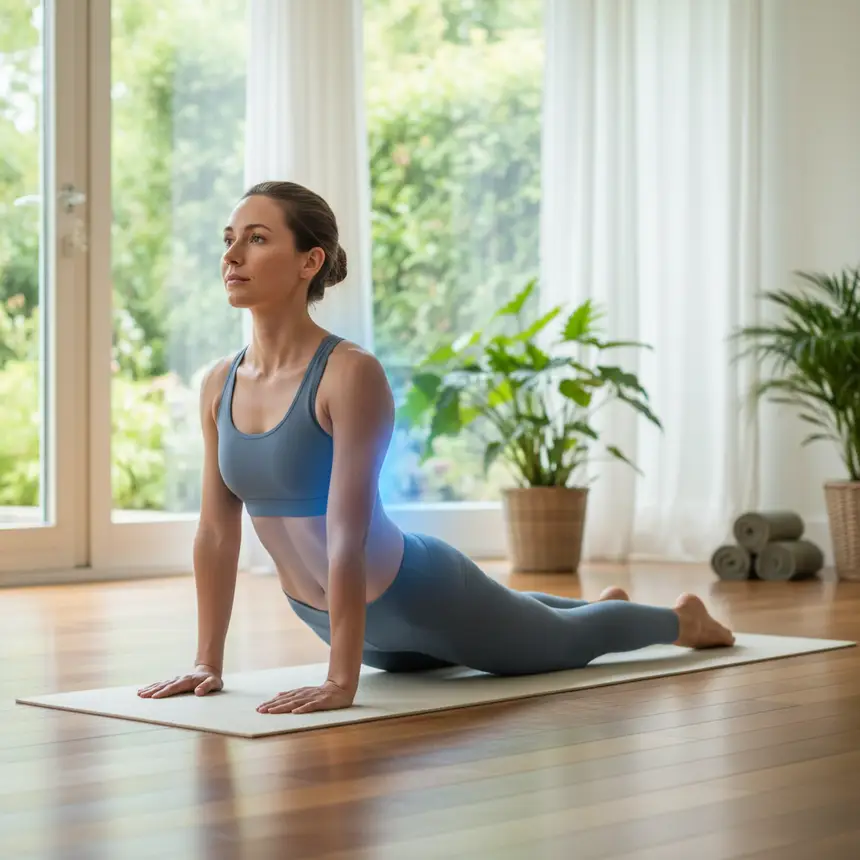
2. Consistent Stretching: Dedicate 5-10 minutes daily to stretching your shoulder and hip muscles. A gentle cobra stretch before bed or right after waking up, which extends the abdomen and lower back, can release tension and aid recovery.
3. Posture Awareness: Make it a habit to check your posture frequently whether sitting or standing. Try to keep your shoulders relaxed and down, your chest slightly open, and your core gently engaged. Consciously maintaining these cues will naturally foster better posture over time.
1. Distinguish Between Pain and Soreness: If you feel a sharp, stabbing, or electric sensation that prevents you from continuing an exercise, that's 'pain'—stop immediately. However, if you feel a dull ache or a satisfying burn during muscle contractions or stretches, that's 'muscle soreness,' a good sign that your muscles are working and can be overcome with consistent effort. Understanding this distinction is crucial for safe and effective training.
2. Consistent Stretching: Dedicate 5-10 minutes daily to stretching your shoulder and hip muscles. A gentle cobra stretch before bed or right after waking up, which extends the abdomen and lower back, can release tension and aid recovery.
3. Posture Awareness: Make it a habit to check your posture frequently whether sitting or standing. Try to keep your shoulders relaxed and down, your chest slightly open, and your core gently engaged. Consciously maintaining these cues will naturally foster better posture over time.
Embark on Your Journey to Better Movement Today
Rounded shoulders and stiff hips can be more than just minor annoyances; they can significantly diminish your quality of life. However, with the right exercises and consistent effort, these issues are highly improvable. Integrate the shoulder stabilization, hip mobility, and core strengthening exercises we've discussed into your routine, and pay close attention to your body's signals. Little by little, these small changes will accumulate, paving the way for a healthier, more vibrant life. Start today with just one small habit and begin your journey towards a more flexible and stronger you.
Frequently Asked Questions
Q. My shoulders are very rounded. Where should I start with exercises?
A. Begin by stretching and releasing tension in your chest muscles, which are often overly tight. Then, focus on strengthening your upper back muscles. Start with light bodyweight exercises or arm raises within your comfortable shoulder range of motion, gradually increasing intensity.
Q. My hips are stiff, and I can't lift my leg sideways easily. Should I push through the discomfort?
A. Absolutely not. If your hips are stiff, prioritize foam rolling or using a massage ball to release tension in the surrounding muscles. Afterward, start with small, gentle movements like leg circles or small leg lifts within a pain-free range, gradually expanding your range of motion.
Q. It's hard for me to differentiate between 'pain' and 'muscle soreness.' Are there simpler guidelines?
A. A simple way to tell: 'Pain' is usually sharp, shooting, or electric, making you exclaim 'Ouch!' and preventing you from continuing the movement. 'Muscle soreness' is generally a dull ache, a deep burning sensation that feels like a good workout, and allows you to repeat the movement. Use this distinction to guide your exercise.
Q. I'm interested in foam roller exercises. How should I use it?
A. The foam roller is excellent for releasing tight muscles. Focus on areas like your upper back, hamstrings, and glutes. Place the foam roller under the muscle and slowly roll back and forth, using your body weight to apply pressure. For particularly tender spots, hold the pressure for 30-60 seconds. This can greatly improve flexibility.
Q. Can I do core exercises every day?
A. Yes, core muscles play a vital role in overall stability, so daily training is beneficial. Instead of high-intensity workouts daily, it's more effective to do consistent, lower-intensity exercises, rotating through various movements. Incorporate different core exercises like planks, bird-dogs, and torso twists in addition to traditional ab exercises.