Unlock effective muscle growth in your 40s. Discover strategies to enhance protein absorption, understand the crucial role of gut health, and learn how specific beneficial bacteria can support muscle synthesis, beyond just diet and exercise. Optimize your body's ability to utilize nutrients, not just your age.

Hitting a Wall in Your 40s? It Might Not Be Your Effort
Many people in their 40s and beyond feel that building muscle becomes an uphill battle, often leading to frustration and even giving up. Despite consistent workouts and careful attention to diet, visible changes in the mirror remain minimal, especially around stubborn areas like love handles or waistline. However, this plateau might not simply be a consequence of aging. The key often lies in how efficiently your body absorbs protein and converts it into muscle tissue. By understanding and optimizing your internal protein utilization pathways, you can unlock a hidden potential for a toned physique and defined lines, even in your forties. Instead of solely focusing on the volume of your workouts, start paying attention to the intricate process of protein utilization within your body. This shift in perspective could be the beginning of your real transformation.

The Protein Paradox: Why Your Shakes Aren't Always Building Muscle
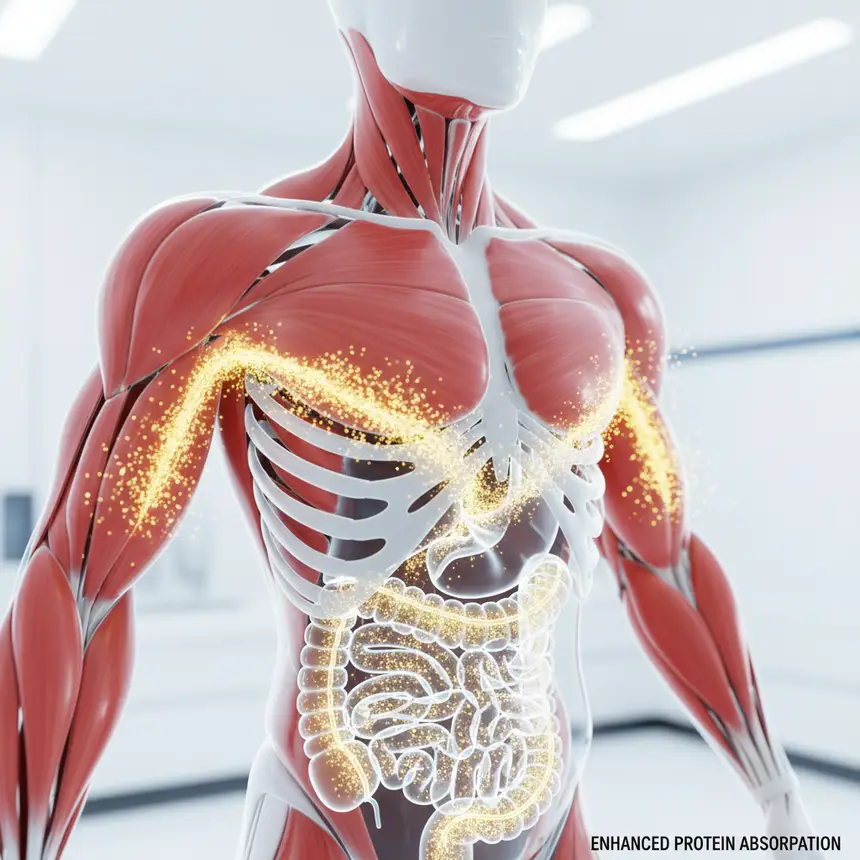
It's common to diligently work out and consume protein supplements, only to experience uncomfortable bloating and indigestion, with little to no muscle growth to show for it. If you're consuming high-quality protein but still facing digestive issues, the problem might not be the protein itself, but rather your body's inability to process it effectively. The journey of protein from consumption to muscle synthesis is crucial; it involves proper digestion, breakdown, and absorption. The gut environment plays a central role in this entire process. Specific beneficial bacteria in your gut help break down proteins into amino acids and efficiently deliver them for muscle synthesis. If this delicate balance of gut flora is disrupted, a significant portion of the protein you consume might not be properly absorbed, leading to discomfort rather than muscle gain. Think of it like putting premium fuel into a car, but the engine isn't running efficiently – the car won't go anywhere.
※ This post contains affiliate links. I may earn a commission at no extra cost to you.

Strategizing for an Anabolic Gut Environment
To cultivate an effective gut environment conducive to muscle growth, several key strategies should be implemented. First, ensure your diet includes plenty of diverse fiber-rich vegetables, fruits, and whole grains, providing essential prebiotics that feed beneficial gut bacteria. Second, regularly consume fermented foods like kimchi, yogurt, or sauerkraut to enhance the diversity of your gut microbiome. Third, focus on boosting the activity of specific beneficial bacteria known to support protein metabolism and muscle synthesis. When considering dietary supplements for this purpose, keep the following criteria in mind:
- Check for specific strains like Lactobacillus plantarum, which have been researched for their role in muscle metabolism support.
- Ensure the supplement contains a sufficient number of active beneficial bacteria (e.g., billions of CFUs) to effectively reach and colonize the gut.
- Opt for clean formulations free from unnecessary fillers or artificial sweeteners. By actively managing your gut environment in these ways, you can enhance protein absorption and more efficiently drive muscle synthesis.

Sustainable Gains: Smart Approaches and Who Benefits Most
Improving gut health and promoting muscle growth is a long-term journey that prioritizes consistency over short-term fixes. Since everyone's body and gut environment are unique, it takes time to discover what approach works best for you. Therefore, patience is key, allowing you to observe changes without rushing the process. Remember, optimizing gut health for muscle growth is a complementary strategy, not a replacement for proper exercise and a balanced diet. It's meant to amplify your existing efforts. This approach is particularly recommended for:
- Individuals in their 40s and beyond who feel their muscle gains are stagnant despite consistent workouts and dietary management.
- Those who frequently experience abdominal discomfort or indigestion after protein intake.
- Anyone seeking to improve body composition, aiming for a toned physique and a more defined waistline. By listening to your body and actively working to optimize your internal environment, you can achieve sustainable health and satisfying physical transformations.
Frequently Asked Questions
Q. Is it truly harder to build muscle after 40?
A. While muscle loss can accelerate and hormonal changes may make muscle synthesis less efficient with age, it's certainly not impossible. Consistent exercise combined with optimizing internal factors like protein absorption can lead to effective muscle growth, even in your 40s and beyond.
Q. Why do some protein supplements cause stomach discomfort?
A. Discomfort after protein supplements can stem from various reasons, but an imbalance in gut microbes is a significant factor. If you lack sufficient beneficial bacteria to efficiently break down and absorb protein, it can remain undigested in the gut, leading to gas, bloating, and other digestive issues.
Q. How does gut health directly influence muscle growth?
A. The gut is central to digesting and absorbing nutrients. Poor gut health can reduce the absorption of essential nutrients, including protein, limiting the building blocks available for muscle synthesis. Furthermore, specific gut bacteria can directly aid in protein metabolism and amino acid utilization for muscle building.
Q. What dietary changes can support both gut health and muscle building?
A. Consuming fiber-rich vegetables, fruits, and whole grains acts as prebiotics, supporting beneficial gut bacteria. Additionally, fermented foods like yogurt, kimchi, and sauerkraut provide diverse probiotics, improving gut health, which in turn enhances protein absorption and positively impacts muscle growth.
Q. Can specific probiotic strains really assist with muscle development?
A. Yes, some research indicates that certain probiotic strains, such as *Lactobacillus plantarum*, may positively influence protein metabolism and promote muscle synthesis. They can support muscle growth by improving protein absorption and potentially reducing inflammation.