Discover the numerous physical benefits and health improvements gained through effective back training. Learn practical workout routines and nutritional tips to build sustainable healthy habits.

Why Back Muscle Strength Is Your Key to Better Health
In our modern, often sedentary lifestyles, poor posture has become a common ailment, leading to various physical discomforts. Weak back muscles, especially from prolonged sitting, can contribute to rounded shoulders and a forward head posture. Engaging in effective back workouts is crucial for correcting these postural imbalances and enhancing overall bodily stability. Strong back muscles reinforce your core, helping to prevent lower back pain and improving the efficiency of daily movements. Beyond the functional benefits, a well-developed back not only improves your physique and how clothes fit but also acts as a powerful motivator for maintaining a consistent exercise routine, boosting mental vitality. It's an indispensable element for building a healthy, functional body that goes far beyond mere aesthetics.
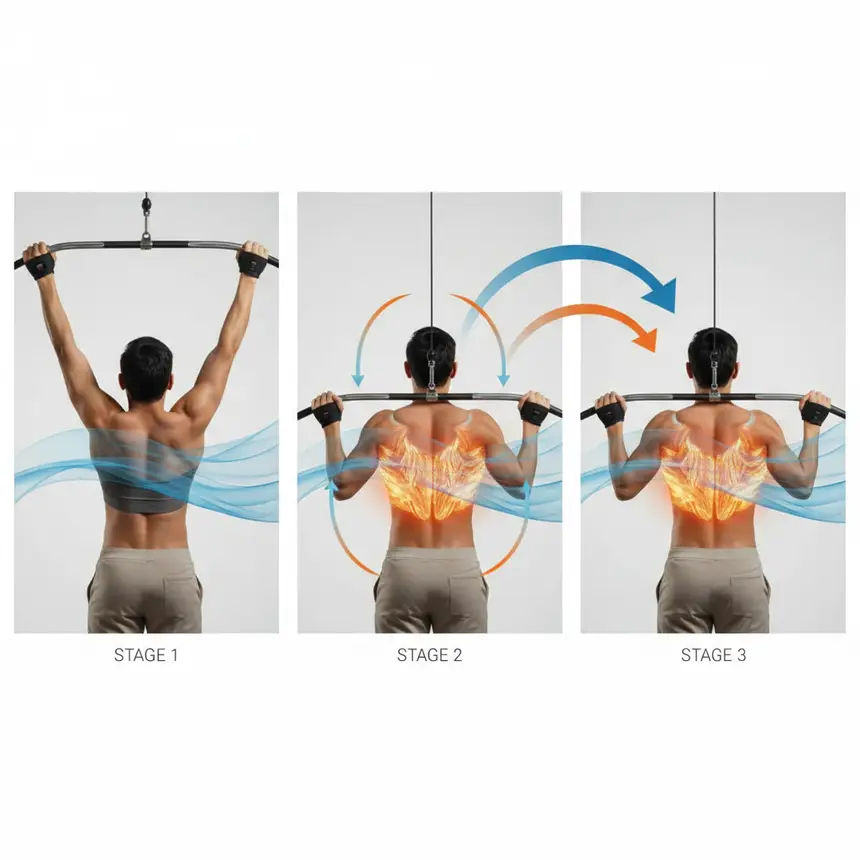
Essential Back Exercises and an Optimal Training Routine
To effectively develop your back muscles, it's vital to stimulate various areas like the latissimus dorsi, trapezius, and rhomboids through a range of exercises. Here are some key movements for back muscle development:
1. Pull-ups: One of the most effective bodyweight exercises for back development, maximizing the contraction and extension of the lats for that coveted V-taper. Beginners can start with resistance bands or negative pull-ups (controlled lowering) and gradually increase repetitions.
2. Lat Pulldowns: An excellent alternative or supplement to pull-ups, especially if full pull-ups are challenging. This machine-based exercise allows for stable, isolated targeting of the lats. Varying your grip (wide overhand vs. narrow underhand) can stimulate different parts of your back.
3. Seated Rows: Highly effective for building thickness and strength in the mid-back. The key is to squeeze your shoulder blades together as you pull the cable towards your abdomen. Experiment with different handles to hit various muscle fibers.
4. Barbell Bent-Over Rows: A compound, high-intensity exercise that engages multiple muscle groups and is excellent for overall back mass. Maintain a strong core and a neutral spine, pulling the barbell towards your lower chest/abdomen without rounding your back.
Incorporate these exercises into your routine 2-3 times per week, aiming for 3 sets of 8-12 repetitions for each. Remember, adequate protein intake before and after workouts, along with a balanced diet, is crucial for muscle recovery and growth.
1. Pull-ups: One of the most effective bodyweight exercises for back development, maximizing the contraction and extension of the lats for that coveted V-taper. Beginners can start with resistance bands or negative pull-ups (controlled lowering) and gradually increase repetitions.
2. Lat Pulldowns: An excellent alternative or supplement to pull-ups, especially if full pull-ups are challenging. This machine-based exercise allows for stable, isolated targeting of the lats. Varying your grip (wide overhand vs. narrow underhand) can stimulate different parts of your back.
3. Seated Rows: Highly effective for building thickness and strength in the mid-back. The key is to squeeze your shoulder blades together as you pull the cable towards your abdomen. Experiment with different handles to hit various muscle fibers.
4. Barbell Bent-Over Rows: A compound, high-intensity exercise that engages multiple muscle groups and is excellent for overall back mass. Maintain a strong core and a neutral spine, pulling the barbell towards your lower chest/abdomen without rounding your back.
Incorporate these exercises into your routine 2-3 times per week, aiming for 3 sets of 8-12 repetitions for each. Remember, adequate protein intake before and after workouts, along with a balanced diet, is crucial for muscle recovery and growth.
※ This post contains affiliate links. I may earn a commission at no extra cost to you.


Strategies for Building a Consistent Exercise Habit
Exercise should be a sustainable habit, not just a short-term event. Here are some practical strategies to help you stay on track:
1. Set Realistic Goals: Instead of overwhelming yourself with ambitious targets, start with achievable mini-goals like 'Do back exercises twice a week' or 'Increase pull-up reps by one each week.' Small successes build momentum and motivation.
2. Prioritize Workout Time: In a busy schedule, it's essential to 'book' your exercise time. Make it a non-negotiable appointment—head straight to the gym after work, or squeeze in a quick session before or after social gatherings.
3. Track Your Progress: Keep an exercise journal or record videos of your workouts. Documenting your journey serves as motivation and helps you objectively assess and improve your form. Watching yourself exercise can reveal details you might otherwise miss.
4. Flexible Nutrition Management: When special events or social gatherings come up, adjust your morning and lunch meals to be lighter. This allows you to enjoy the evening meal in a balanced way. Smart moderation, rather than extreme restriction, significantly enhances the sustainability of your diet plan.
1. Set Realistic Goals: Instead of overwhelming yourself with ambitious targets, start with achievable mini-goals like 'Do back exercises twice a week' or 'Increase pull-up reps by one each week.' Small successes build momentum and motivation.
2. Prioritize Workout Time: In a busy schedule, it's essential to 'book' your exercise time. Make it a non-negotiable appointment—head straight to the gym after work, or squeeze in a quick session before or after social gatherings.
3. Track Your Progress: Keep an exercise journal or record videos of your workouts. Documenting your journey serves as motivation and helps you objectively assess and improve your form. Watching yourself exercise can reveal details you might otherwise miss.
4. Flexible Nutrition Management: When special events or social gatherings come up, adjust your morning and lunch meals to be lighter. This allows you to enjoy the evening meal in a balanced way. Smart moderation, rather than extreme restriction, significantly enhances the sustainability of your diet plan.

Back Workout Precautions and Ideal Candidates
Like any physical activity, back workouts require specific precautions to ensure safety and effectiveness. Prioritize correct form over heavy weights.
Back workouts are particularly recommended for:
- Warm-up and Cool-down: Before your main workout, perform light cardio and dynamic stretches to prepare your muscles. Afterward, static stretching helps relax tense muscles, crucial for injury prevention.
- Maintain Proper Form: Be mindful not to arch or round your lower back excessively during back exercises. Engage your core and keep a neutral spine. Dedicate time to master the form with lighter weights initially.
- Progressive Overload Principle: Gradually increase your workout intensity or volume. Sudden jumps in weight or reps can lead to injuries.
- Listen to Your Body: If you experience pain, stop the exercise immediately, rest, or seek guidance from a fitness professional.
Back workouts are particularly recommended for:
- Office Workers with Sedentary Jobs: Helps improve rounded shoulders and forward head posture.
- Individuals with Poor Posture: Effective for posture correction and core strengthening.
- Anyone Seeking Overall Physical Improvement: Strong back muscles are fundamental to all physical activities.
- Those Desiring a Balanced Physique: Well-developed back muscles contribute to a more aesthetically pleasing upper body silhouette.
Frequently Asked Questions
Q. Is it okay to work out my back every day?
A. Just like any other muscle group, your back muscles need sufficient time to recover. Instead of training your back daily, aim for 2-3 focused sessions per week, allowing a day or two of rest or working other muscle groups in between. This approach is more effective for muscle growth and recovery.
Q. Which is more effective: lat pulldowns or pull-ups?
A. Both exercises are excellent for lat development. Pull-ups, as a bodyweight exercise, also engage overall body coordination and core strength, making them generally more challenging. Lat pulldowns, using a machine, offer a stable way to isolate and train the lats effectively. It's best to combine them according to your fitness level and goals.
Q. Will building my back muscles make my shoulders look wider?
A. Yes, developing your latissimus dorsi (lats) can broaden your back, which creates the visual effect of wider shoulders. Especially a well-developed upper lat can contribute significantly to achieving a V-tapered upper body silhouette.
Q. What if I struggle with diet management after workouts?
A. If managing every meal perfectly is challenging, start by focusing on protein intake. Consuming quality protein sources like protein shakes or lean meats within 30 minutes post-workout can aid muscle recovery. Also, try to choose healthy complex carbohydrates and unsaturated fats for the rest of your meals for overall better nutrition.