Unlock your fitness potential with our beginner's gym routine guide. Learn effective workout sequencing, proper form, and progressive overload tips for sustainable results. Start your journey today!

Lost in the Gym? Let's Find Your Starting Point!
Stepping into a gym for the first time can feel like entering a maze. With countless machines and a bustling atmosphere, it's easy to feel overwhelmed and unsure where to begin. This initial confusion can often lead to discouragement, sometimes even before you've lifted your first weight. The secret to a successful fitness journey, especially for beginners, lies in setting clear goals and establishing a well-structured workout routine. Understanding the most effective exercise sequence, tailored to your current fitness level and aspirations, is paramount for building a sustainable and rewarding fitness habit.

The Pitfalls of Starting Too Hard, Too Fast
A common mistake among gym newcomers is an eagerness to jump into intense routines or lift heavy weights right from the start. While enthusiasm is commendable, this approach often leads to rapid burnout and increases the risk of injury, which are primary reasons many people abandon their fitness goals prematurely. The cornerstone of any effective beginner workout plan is progressive overload combined with mastering proper form. Instead of pushing for maximum weight immediately, focus on selecting a weight that allows you to complete 10 to 15 repetitions with impeccable technique. A smart strategy is to use lighter weights for your first 1-2 sets to perfect your form, then gradually increase the weight for your final sets. This mindful progression, paying attention to your body's signals, is key to long-term gains and injury prevention.
※ This post contains affiliate links. I may earn a commission at no extra cost to you.


Crafting Your Ideal Workout Strategy
An efficient gym routine follows a systematic structure, typically divided into three phases: warm-up, main workout, and cool-down. Start with about 10 minutes of light cardio or dynamic stretching to elevate your body temperature and prepare your muscles, significantly reducing injury risk. Next, dedicate 45 to 60 minutes to strength training, focusing on major muscle groups and alternating between upper and lower body days for optimal recovery and growth. Conclude your session with 5 to 10 minutes of static stretching to gently ease muscle tension and enhance flexibility. Aim to consistently follow this routine about three times a week. It’s far more beneficial to adhere to a manageable three-day schedule consistently than to aim for daily workouts and quickly lose momentum.
Maximizing Your Gains: The Power of Workout Order
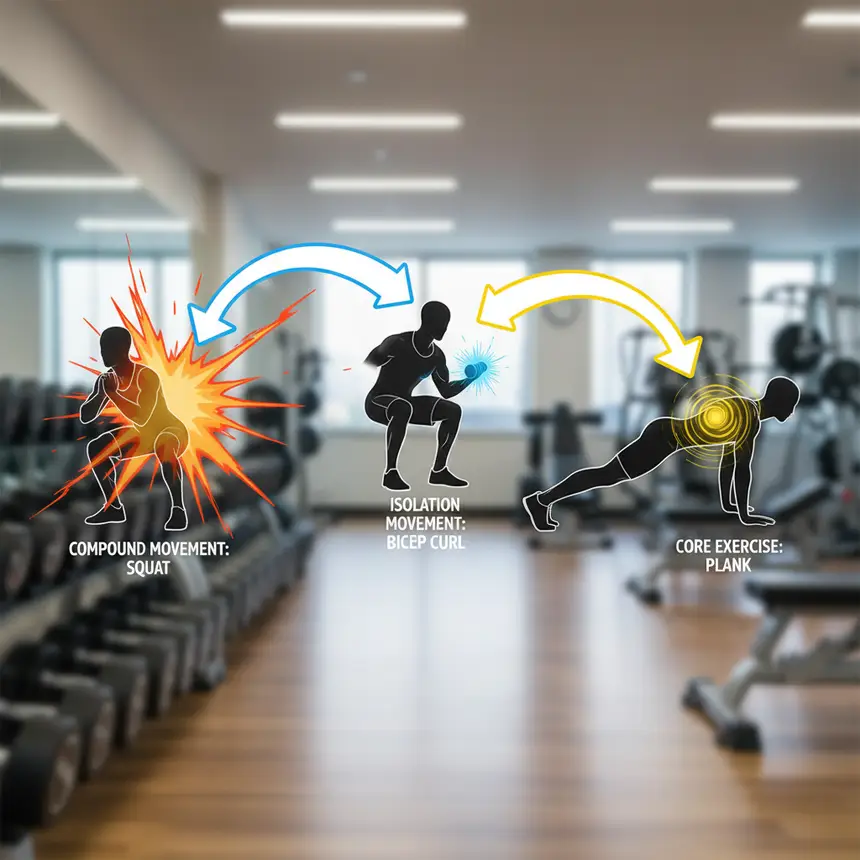
The sequence of your exercises is a critical factor in determining the overall effectiveness of your gym routine. A general, highly efficient principle is to work larger muscle groups before smaller ones. Compound movements, such as squats, deadlifts, and bench presses, demand a great deal of energy and engage multiple joints and muscles. Performing these exercises at the beginning of your workout, when your energy levels are highest, is ideal for maximizing strength gains and improving overall performance. Subsequently, transition to isolation exercises, like bicep curls, tricep extensions, or leg extensions, which target specific muscle groups. You can wrap up your routine with core work or a light cardio session. Prioritizing demanding, heavy lifts before fatigue sets in helps minimize injury risk and ensures you get the most out of each muscle group. Additionally, keeping rest intervals between sets short, around 1 to 2 minutes, can increase workout density and provide a greater stimulus for muscle adaptation.

Embrace the Transformation Consistency Brings
Embarking on a new gym routine is an exciting journey that promises positive changes for both your body and mind. Initially, the focus should be on learning the ropes and cultivating a consistent habit. Keep the fundamental principles in mind: progressive overload, correct form, and an effective workout sequence. Remember, the true magic isn't in a single grueling session, but in the sustained and consistent effort you put in over time. Your body is incredibly responsive and will undoubtedly reflect the time and dedication you invest. Start today with your optimized gym routine and step into a healthier, more vibrant life!
Frequently Asked Questions
Q. How many days a week should a beginner lift weights?
A. For beginners, aiming for three strength training sessions per week is generally recommended. This allows for adequate muscle recovery and growth while helping you establish a consistent workout habit. You can gradually increase frequency as your fitness improves.
Q. What's the most crucial aspect of preventing injuries during workouts?
A. Maintaining proper form is paramount. Practice your movements in front of a mirror or seek guidance from a professional to ensure accuracy. Avoid using weights that are too heavy for your current ability. A thorough warm-up and cool-down stretching are also essential.
Q. How do I determine the right number of repetitions per set for strength training?
A. For muscle growth, selecting a weight that allows you to perform 8 to 12 repetitions to near fatigue is often effective. Beginners should start with a lighter weight, aiming for 10 to 15 reps, to master the form before progressively increasing the load.
Q. Is stretching after a workout really necessary?
A. Yes, static stretching after strength training can help relieve muscle tension, improve flexibility, and potentially reduce post-workout soreness. It's beneficial to hold each stretch for 15-30 seconds during your cool-down.
Q. How often should I change my workout routine?
A. It's generally advisable to introduce minor changes to your workout routine every 4 to 8 weeks. This prevents your body from fully adapting to specific exercises, providing new stimuli that encourage continuous muscle growth and development. Consider adjusting exercises, sets, reps, or rest times.