Discover an effective 3-day split back workout routine for fitness beginners. Let go of rigid rules and build a strong, functional back with a flexible approach to exercise.

Finding Your Fitness Rhythm in a Hectic World
In today's fast-paced world, consistently hitting the gym can feel like a daunting task. While many once pursued intense fitness goals, a growing number are now seeking functional strength and overall well-being without the added stress of rigid workout plans. If you're a fitness beginner looking for a sustainable approach to back training, a flexible 3-day split routine might be exactly what you need. Instead of hyper-focusing on isolated movements, this method encourages your back muscles to work together, promoting balanced development and making your fitness journey more enjoyable and long-lasting.

The Beginner's Trap: Why Rigid Routines Often Fail
Many fitness newcomers jump into the gym with an ambitious mindset, often adopting complex split routines and trying to perfectly isolate every muscle with strict form. However, this obsessive approach can quickly lead to burnout, injury, and a loss of motivation. Especially when it comes to back exercises, which involve a complex interplay of many muscles, trying to isolate a single muscle group can often compromise your form and reduce overall effectiveness. Overly strict back workout routines can place unnecessary stress on your body and strip away the inherent joy of exercise. Remember, consistency and listening to your body are far more important than adhering to an 'ideal' plan.
※ This post contains affiliate links. I may earn a commission at no extra cost to you.

A Flexible Pull Day: Mastering Your Back Workout
It's time to ditch the rigidity and embrace a more flexible and efficient back workout routine. We'll focus on the 'Pull' day within a 'Push, Pull, Legs' 3-day split. This approach effectively engages various back muscles and surrounding supportive muscle groups, promoting comprehensive back development and improved coordination. Straight Arm Pulldown: An excellent warm-up to activate your lats before heavy lifting. Focus on maintaining tension in your back as you pull the bar down with slightly bent elbows, then slowly release. Prioritize feeling the muscle engagement over heavy weight; aim for 3 sets of 15+ repetitions.
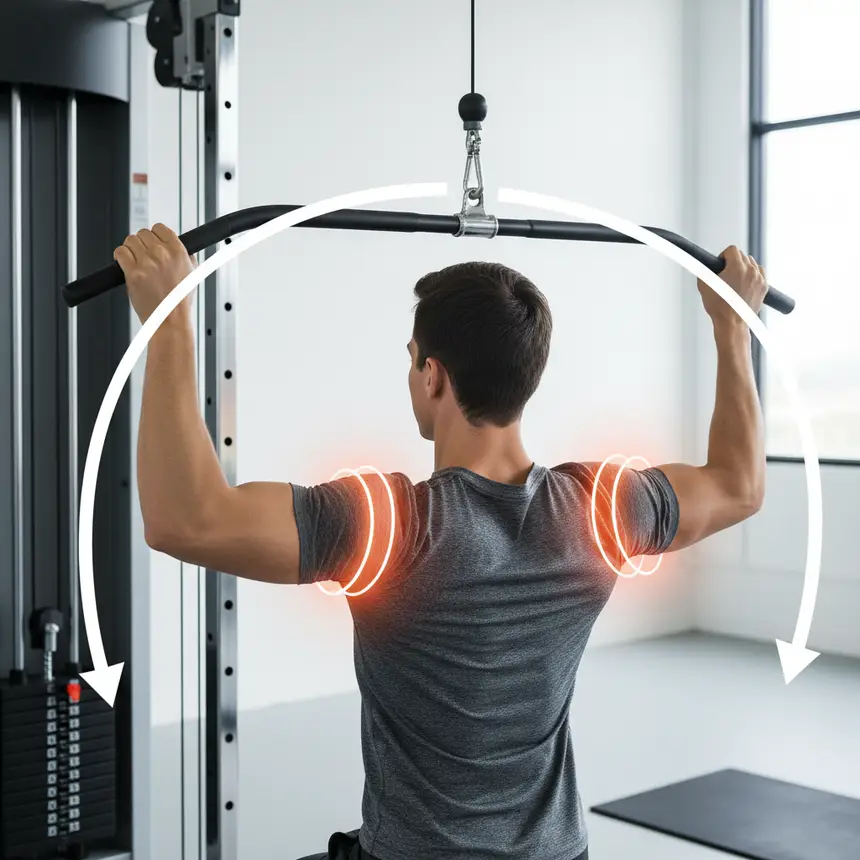
Pull-ups or Lat Pulldowns: These are cornerstone compound exercises for overall back development. If traditional pull-ups are too challenging, use an assisted pull-up machine, resistance bands, or opt for lat pulldowns. Concentrate on driving your shoulder blades down as you pull, and fully extending your back with resistance during the eccentric phase. Perform 3 sets for as many reps as possible.
Seated Cable Rows (or Machine Rows): Perfect for building thickness in the middle back with a horizontal pulling motion. As you pull the handle, squeeze your shoulder blades together. During the release, allow your shoulder blades to extend forward fully. Focus on the full contraction and stretch of your back muscles for 3 sets.
Rear Delt Flyes (Machine or Dumbbell): This exercise effectively targets your posterior deltoids and upper back, adding more dimension to your overall back physique. Perform by extending your arms out to the sides, focusing on bringing your shoulder blades together. Do 3 sets with a moderate weight.
* Biceps Curls (Dumbbell or Barbell): Since your biceps are heavily involved in most pulling movements, a few sets of curls as a finisher will give them an extra pump. Aim for 3 sets of 8-12 repetitions with a comfortable weight.
Pull-ups or Lat Pulldowns: These are cornerstone compound exercises for overall back development. If traditional pull-ups are too challenging, use an assisted pull-up machine, resistance bands, or opt for lat pulldowns. Concentrate on driving your shoulder blades down as you pull, and fully extending your back with resistance during the eccentric phase. Perform 3 sets for as many reps as possible.
Seated Cable Rows (or Machine Rows): Perfect for building thickness in the middle back with a horizontal pulling motion. As you pull the handle, squeeze your shoulder blades together. During the release, allow your shoulder blades to extend forward fully. Focus on the full contraction and stretch of your back muscles for 3 sets.
Rear Delt Flyes (Machine or Dumbbell): This exercise effectively targets your posterior deltoids and upper back, adding more dimension to your overall back physique. Perform by extending your arms out to the sides, focusing on bringing your shoulder blades together. Do 3 sets with a moderate weight.
* Biceps Curls (Dumbbell or Barbell): Since your biceps are heavily involved in most pulling movements, a few sets of curls as a finisher will give them an extra pump. Aim for 3 sets of 8-12 repetitions with a comfortable weight.

Personalizing Your Back Day: Tips for Sustainable Growth
The most crucial aspect of this back workout routine is to let go of any 'all-or-nothing' mentality. Feel free to adjust the order of exercises based on gym availability or your energy levels. If a machine is occupied, move on to another exercise or find a suitable alternative. Avoiding stress over minor changes will boost your consistency in the long run. When it comes to weight and reps, the key is to push until you genuinely feel like you 'can't do another rep!' rather than fixating on specific numbers. For beginners, concentrating on proper form and muscle connection is far more beneficial than lifting heavy. Take mindful breaths during each movement, and focus your attention on how your back muscles are contracting and extending; this will lead to a much more effective and rewarding back workout experience.

The Path to a Resilient Back: Consistency Over Perfection
The back workout routine we've explored today is more than just a set of exercises; it's a philosophy for building a sustainable, healthy lifestyle. Instead of fixating on precise isolation and quantified metrics, this approach emphasizes functional movement and overall muscular coordination. This flexible methodology makes fitness enjoyable for everyone, from absolute beginners to seasoned gym-goers. Your body is a complex system, and your fitness preferences and goals are bound to evolve over time. As long as you stay injury-free and consistent, exploring how your body responds and grows is a valuable journey in itself. Embrace this no-pressure approach to back training and start building a strong, resilient back that supports your life!
Frequently Asked Questions
Q. Is a 3-day split routine truly suitable for fitness beginners?
A. Yes, a 3-day split can be highly effective for beginners. It provides ample rest and recovery time for each muscle group, reducing fatigue and promoting consistent training. The 'Push, Pull, Legs' split, as discussed, is particularly intuitive and easy for newcomers to adapt to.
Q. Should I focus on isolating specific back muscles during my workout?
A. You don't necessarily need to obsess over isolation, especially as a beginner. Focusing on 'coordination' – allowing your entire back and supporting muscles to work together – is often more beneficial. This holistic approach helps improve overall back development and functional strength.
Q. Do I need to follow a strict exercise order?
A. While the routine provides a guideline, feel free to adjust the exercise order based on gym availability or your personal energy levels. However, it can be effective to perform the most challenging or important exercises when you feel most energized.
Q. Pull-ups are too challenging for me. Are there good alternatives?
A. Absolutely! If pull-ups are difficult, you can use an assisted pull-up machine, resistance bands, or substitute them with lat pulldowns on a machine. The goal is to stimulate your back muscles effectively, so choose the method that allows you to feel the movement and muscle engagement consistently.
Q. How can I improve my form during back exercises?
A. To improve form, start with lighter weights and concentrate on mastering the movement. Using a mirror to observe your posture or watching instructional videos can be very helpful. Focus on the mind-muscle connection, feeling how your back muscles contract and extend with each repetition.