Looking for an efficient exercise order strategy to achieve your fitness goals?
Discover the optimal workout routine that accelerates body transformation simply by sequencing strength and cardio.

Standing at the Gym Entrance: The Eternal Workout Order Dilemma
Every gym-goer, from seasoned veterans to enthusiastic beginners, has faced that moment of indecision upon stepping into the fitness center. 'Should I hop on the treadmill first, or head straight to the weights?' Conventional wisdom often suggests cardio for weight loss and weights for muscle gain, but is this always the most effective approach? I recall countless early gym sessions where I'd spend significant time on aerobic exercise, only to find my strength lagging during subsequent resistance training, leading to frustratingly slow progress. It quickly became clear that the sequence of your exercises isn't just a matter of personal preference; it's a critical strategic choice that profoundly impacts your results.

How Incorrect Exercise Sequencing Undermines Your Fitness Progress
Many assume that a 'good workout' means breaking a sweat right away with intense cardio. However, this common starting point can actually hinder progress towards specific fitness objectives. Consider muscle growth, for instance: it demands intense, focused effort to stimulate muscle fibers effectively. If you begin with a lengthy cardio session, you deplete your body's primary energy reserves (glycogen). This leaves you with diminished strength and concentration for heavy compound lifts like squats or bench presses, ultimately compromising the quality of your resistance training and limiting potential muscle gains. Similarly, for fat loss, simply prioritizing calorie-burning cardio might not be the most efficient path for long-term body composition changes and maintaining a healthy metabolic rate.
※ This post contains affiliate links. I may earn a commission at no extra cost to you.

Tailoring Your Workout Sequence to Achieve Specific Goals
The optimal order of exercises is not one-size-fits-all; it distinctly depends on your primary fitness objective.
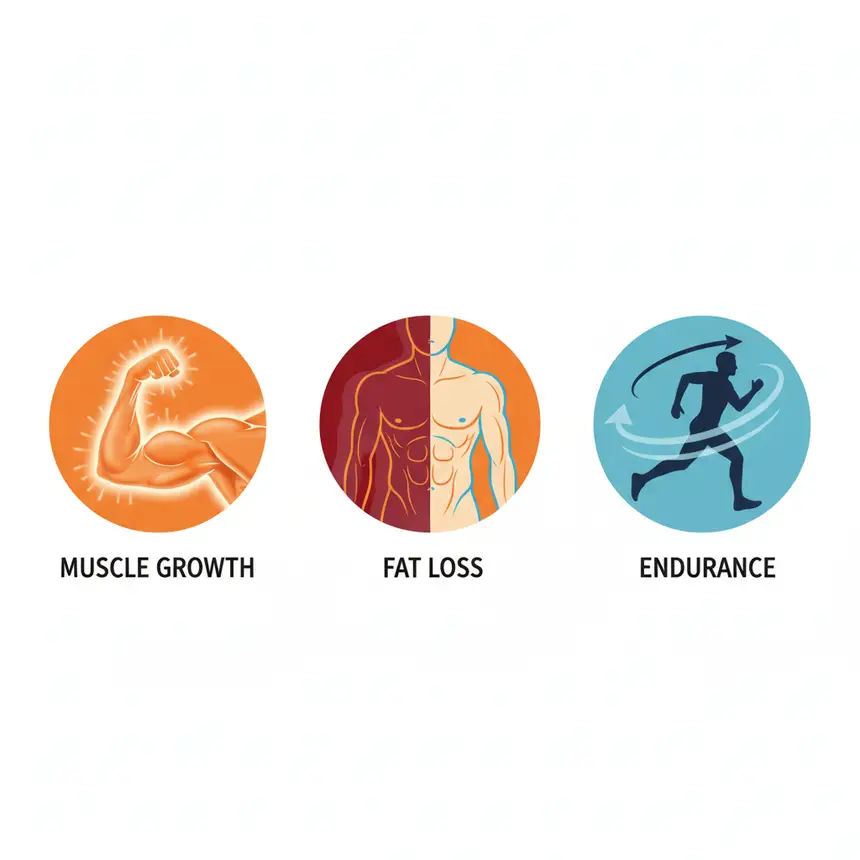
1. For Peak Muscle Development, Prioritize Strength Training: Muscle growth thrives on intense stimuli. It's crucial to tackle your main resistance exercises—such as squats, deadlifts, and bench presses—when your energy levels are highest. Attempting heavy lifts when already fatigued from extensive cardio will compromise your form, reduce the weight you can lift, and ultimately lessen the muscle-building stimulus.
2. For Effective Fat Reduction, Lead with Resistance Training: Contrary to the old adage of 'cardio first for fat loss,' contemporary fitness trends often recommend strength training first. Engaging in resistance exercises initially depletes glycogen stores. When you then transition to cardio, your body is more inclined to tap into fat reserves as its primary energy source. This strategy not only aids in reducing overall body fat but also helps preserve muscle mass, which is vital for maintaining a healthy metabolic rate and preventing the dreaded 'yo-yo' effect.
3. For Enhanced Endurance and Performance Tests, Begin with Cardio: If your goal is to excel in endurance events like marathons, or pass specific physical fitness exams (e.g., for public service roles), then optimizing your cardiovascular performance is paramount. Starting with strength training that fatigues your legs or core muscles can negatively impact your speed, stamina, and overall performance in these critical endurance-focused activities.
1. For Peak Muscle Development, Prioritize Strength Training: Muscle growth thrives on intense stimuli. It's crucial to tackle your main resistance exercises—such as squats, deadlifts, and bench presses—when your energy levels are highest. Attempting heavy lifts when already fatigued from extensive cardio will compromise your form, reduce the weight you can lift, and ultimately lessen the muscle-building stimulus.
2. For Effective Fat Reduction, Lead with Resistance Training: Contrary to the old adage of 'cardio first for fat loss,' contemporary fitness trends often recommend strength training first. Engaging in resistance exercises initially depletes glycogen stores. When you then transition to cardio, your body is more inclined to tap into fat reserves as its primary energy source. This strategy not only aids in reducing overall body fat but also helps preserve muscle mass, which is vital for maintaining a healthy metabolic rate and preventing the dreaded 'yo-yo' effect.
3. For Enhanced Endurance and Performance Tests, Begin with Cardio: If your goal is to excel in endurance events like marathons, or pass specific physical fitness exams (e.g., for public service roles), then optimizing your cardiovascular performance is paramount. Starting with strength training that fatigues your legs or core muscles can negatively impact your speed, stamina, and overall performance in these critical endurance-focused activities.
A Practical and Balanced Workout Routine for Diverse Goals
Based on the goal-specific strategies discussed, here's a highly recommended exercise sequence that caters to most individuals aiming for overall fitness improvements, muscle building, and fat loss. This routine is designed to effectively hit multiple objectives in a balanced manner.
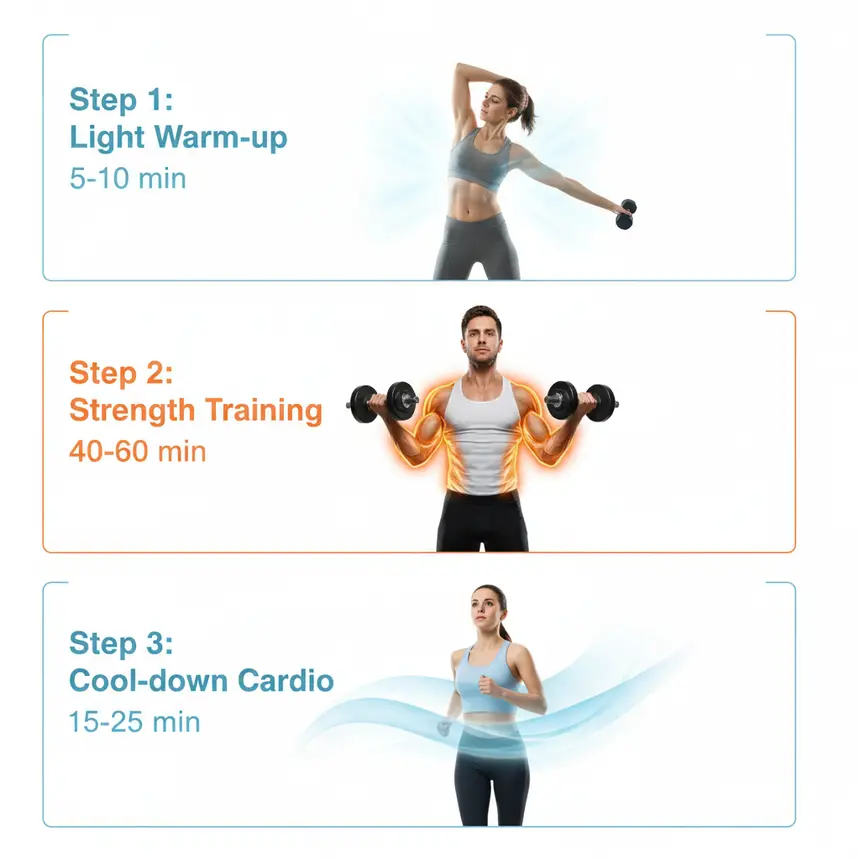
1. Light Warm-up Cardio (5-10 minutes): Begin with a gentle session on a treadmill or stationary bike. The aim is to slowly elevate your heart rate and warm up your muscles, preparing your body for more intense activity without significant energy depletion.
2. Core Strength Training (40-60 minutes): This is your prime time for resistance exercises. Focus on compound movements that work multiple muscle groups, such as squats, deadlifts, and overhead presses. Capitalize on your peak energy levels for maximum effectiveness and proper form.
3. Cool-down Cardio (15-25 minutes): After your strength workout, transition to a moderate-intensity cardio session. At this point, your glycogen stores are partially depleted, creating a more favorable environment for your body to utilize fat for fuel.A Note on Fasted Cardio:
While some studies suggest that fasted cardio might offer a slight advantage for fat oxidation, performing high-intensity interval training (HIIT) on an empty stomach can increase the risk of muscle breakdown and accumulated fatigue. It's crucial to consider your individual fitness level and overall well-being when deciding whether to incorporate fasted cardio. Always prioritize listening to your body over blindly following trends.
1. Light Warm-up Cardio (5-10 minutes): Begin with a gentle session on a treadmill or stationary bike. The aim is to slowly elevate your heart rate and warm up your muscles, preparing your body for more intense activity without significant energy depletion.
2. Core Strength Training (40-60 minutes): This is your prime time for resistance exercises. Focus on compound movements that work multiple muscle groups, such as squats, deadlifts, and overhead presses. Capitalize on your peak energy levels for maximum effectiveness and proper form.
3. Cool-down Cardio (15-25 minutes): After your strength workout, transition to a moderate-intensity cardio session. At this point, your glycogen stores are partially depleted, creating a more favorable environment for your body to utilize fat for fuel.A Note on Fasted Cardio:
While some studies suggest that fasted cardio might offer a slight advantage for fat oxidation, performing high-intensity interval training (HIIT) on an empty stomach can increase the risk of muscle breakdown and accumulated fatigue. It's crucial to consider your individual fitness level and overall well-being when deciding whether to incorporate fasted cardio. Always prioritize listening to your body over blindly following trends.

Your Workout is a Strategy, Not Just Time Spent
Many individuals become disheartened when their consistent effort in the gym doesn't translate into the desired results. Often, this isn't due to a lack of intensity or duration, but rather an overlooked element: the strategic order of exercises. Think of it like baking: having all the right ingredients (your dedication and effort) isn't enough to make a perfect cake (your body transformation) if the steps aren't followed in the correct sequence. Moving beyond the 'just start running' mindset, take the time to define your fitness goals clearly and implement an exercise sequence tailored to them. You'll likely be amazed at how quickly your body begins to respond. Make your efforts count by making smart choices about your workout order.
Frequently Asked Questions
Q. Is it better for beginners to also start with strength training?
A. Yes, for most beginners with goals like muscle gain or fat loss, beginning with strength training is beneficial. However, the initial focus should be on mastering proper form with lighter weights to prevent injury. Gradually increasing intensity will help maximize the benefits of strength training.
Q. Is relying solely on cardio for weight loss inefficient?
A. While cardio is effective for burning calories, for sustainable weight loss and healthy body composition changes, combining it with strength training is far more efficient. Building muscle mass increases your basal metabolic rate, meaning you burn more calories even at rest.
Q. Can I change my workout order frequently?
A. While it's good to adjust your workout order based on specific goals, it's more effective to stick to a consistent strategy rather than randomly changing it every session. Your body adapts to routines, allowing for progressive overload and consistent improvement.
Q. What's an ideal duration for cardio after strength training?
A. A general recommendation is 15 to 25 minutes of moderate-intensity cardio. This duration helps to efficiently utilize remaining glycogen stores after strength training, encouraging your body to switch to fat for fuel. You can adjust this based on your individual fitness level and specific goals.
Q. How should I approach stretching before a workout?
A. Before your main workout, dynamic stretching (movements that put your body through a range of motion) is recommended to increase joint mobility and activate muscles. Static stretching (holding a stretch for a period) is generally more effective post-workout for muscle relaxation and improving flexibility.