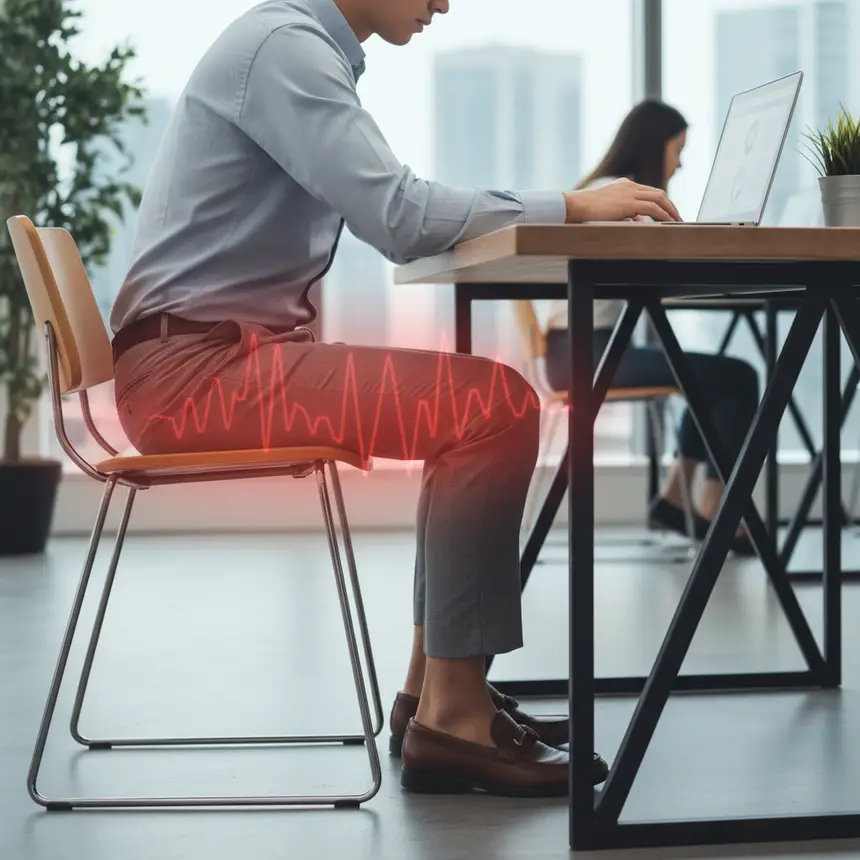
A comprehensive guide to posture correction exercises for office workers spending long hours seated. Discover effective ways to alleviate neck, shoulder, and lower back pain, maintaining proper alignment. Reclaim your well-being with easy-to-follow desk exercises.
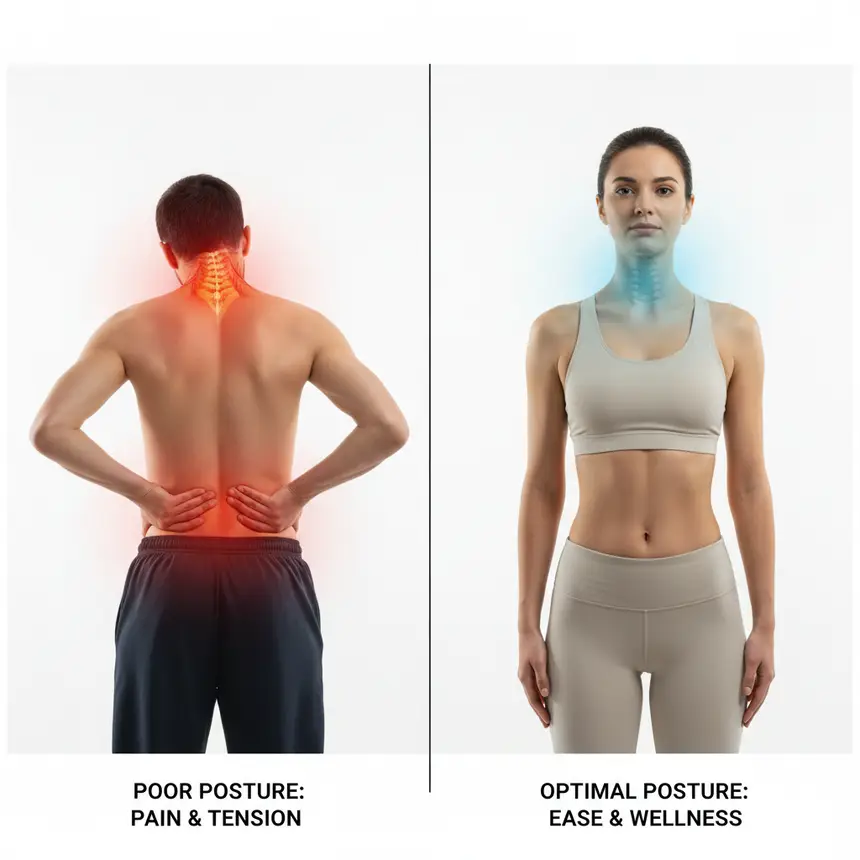
Beyond the Desk: Reclaiming Your Body's Comfort
For many office workers, long hours spent seated have become a primary source of physical discomfort. This sedentary lifestyle often leads to poor posture, manifesting as tight necks, rounded shoulders, and chronic lower back pain. But it doesn't have to be your normal. Proactive posture correction and regular movement can significantly alleviate these issues, enhancing your overall physical well-being. Good posture isn't just about looking better; it boosts your energy levels, improves confidence, and contributes to a more vibrant, pain-free daily life. By consistently incorporating mindful movements and maintaining proper alignment, you can release accumulated tension and guide your body back to its natural, balanced state. Even small adjustments can lead to remarkable changes in how you feel and move.
Your Desk-Side Dozen: Essential Posture-Boosting Moves
You don't need a gym to start improving your posture. These simple exercises can be done right at your desk to release tension and encourage better alignment. Consistency is key, and you'll likely feel the benefits quickly.
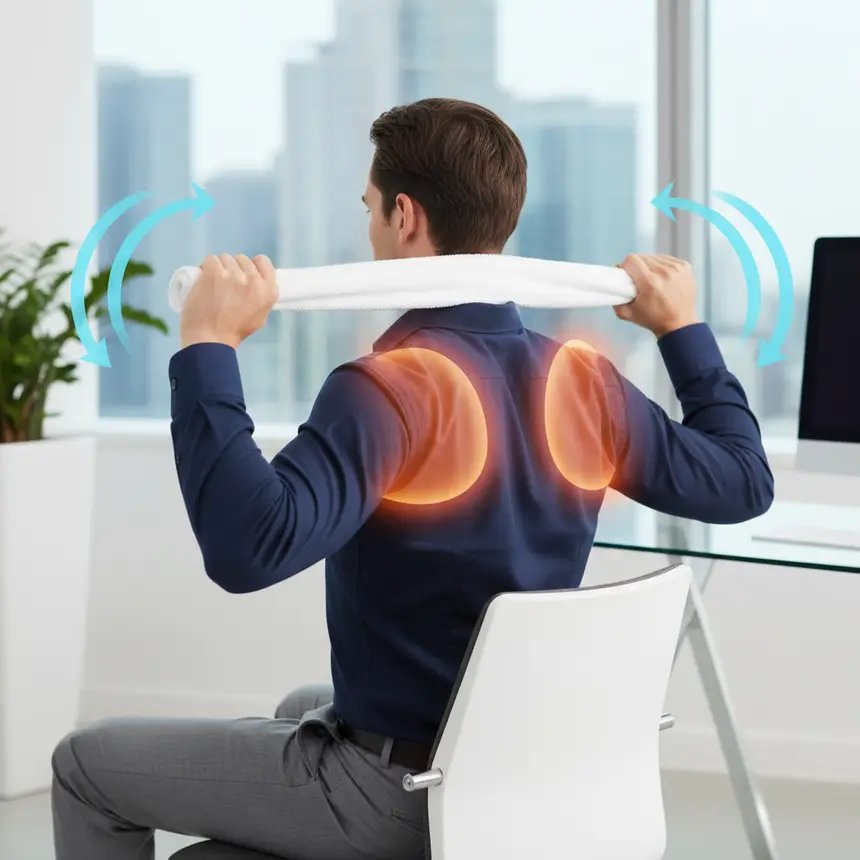
- Shoulder Blade Squeezes: Hold a hand towel with both hands, about shoulder-width apart. Keeping your elbows slightly bent and tucked close to your body, gently pull the towel apart as you squeeze your shoulder blades together. Focus on engaging the muscles between your shoulder blades. Hold for 5-10 seconds, then release. Repeat 8-12 times. This helps counteract rounded shoulders.
- Seated Thoracic Twist: Sit upright in your chair with your feet flat. Place one hand on your opposite knee and the other hand on the back of your chair. Gently twist your upper body, looking over your shoulder. Keep your hips facing forward. Hold for 15-20 seconds per side, performing 2-3 repetitions. This improves spinal mobility and reduces upper back stiffness.
- Upper Back Myofascial Release: Place a tennis ball or a specialized massage ball between your upper back (avoiding the spine directly) and the back of your chair or a wall. Lean into the ball, applying gentle pressure to release tight spots. Roll slowly up and down or in small circles for 1-2 minutes on each side. This helps to release trigger points and improve blood flow to stiff areas.
※ This post contains affiliate links. I may earn a commission at no extra cost to you.

Building a Habit: Integrating Posture Work into Your Day
Posture correction is most effective when it becomes a consistent part of your daily routine, not just an occasional effort. Here's how to weave these practices seamlessly into your workday:
- Schedule Micro-Breaks: Set reminders on your phone or computer to stand up, stretch, or do a quick posture exercise every 30-60 minutes. Even 1-2 minutes of movement can make a big difference over the day.
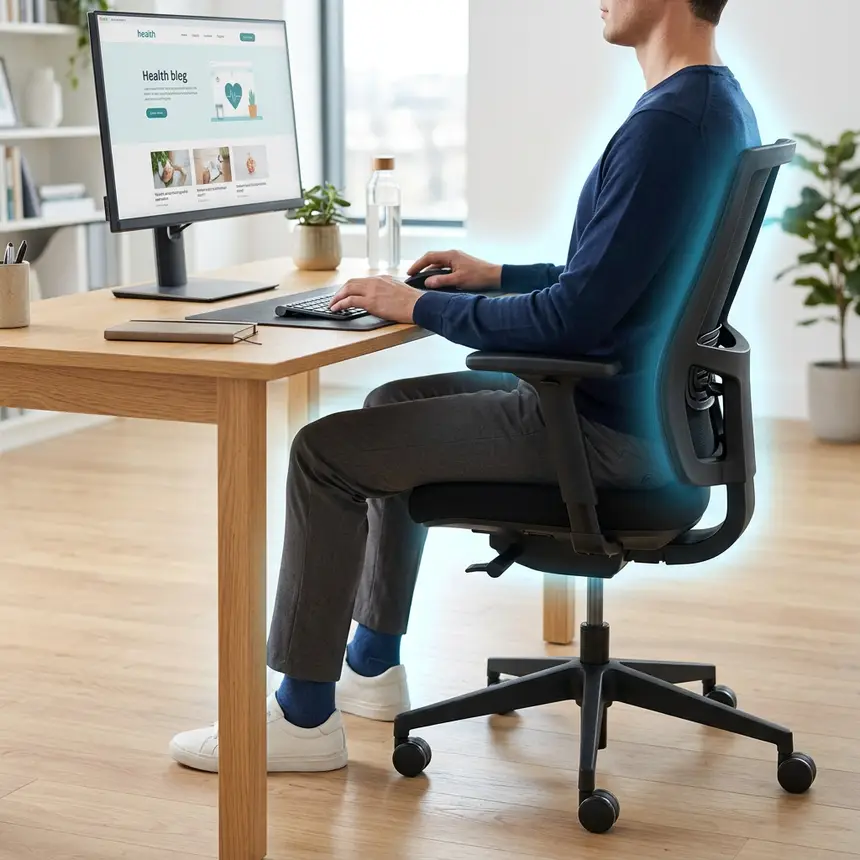
- Optimize Your Workspace: Ensure your ergonomic setup supports good posture. Your feet should be flat on the floor or a footrest, and the top of your monitor should be at eye level. Adjust your chair so your lower back is supported, and your keyboard and mouse are close enough to keep your shoulders relaxed.
- Self-Assess Regularly: Use a mirror or a simple wall test (stand with your head, shoulders, and glutes touching the wall) to check your alignment. Regularly observing your posture can help you identify and correct bad habits early.
- Progressive Approach: Start with gentle movements and gradually increase the duration or intensity. Always listen to your body and avoid pushing into pain. The goal is consistent, comfortable movement, not immediate perfection.

Smart Movement: Safety First and Who Benefits Most
Before diving into posture correction exercises, it's vital to understand some key precautions and identify who stands to benefit the most from these practices.
These posture correction exercises are particularly beneficial for:
- Stop if You Feel Pain: Any exercise that causes sharp or increasing pain should be immediately stopped. Pushing through pain can lead to injury and worsen your condition.
- Focus on Form: Executing each movement with proper form is paramount. Incorrect form can negate the benefits and even cause harm. Use a mirror to check your alignment, and if unsure, consider consulting a fitness professional.
- Consult a Professional for Chronic Issues: If you experience persistent pain, have a pre-existing medical condition, or suspect an injury, always consult a healthcare provider or physical therapist before starting any new exercise regimen.
These posture correction exercises are particularly beneficial for:
- Office workers or students who spend extended periods sitting.
- Individuals experiencing chronic stiffness or discomfort in their neck, shoulders, or lower back.
- Anyone concerned about their body alignment, such as rounded shoulders or a forward head posture.
- Those looking for simple ways to incorporate more movement and vitality into their daily routine.
Frequently Asked Questions
Q. What are the best desk stretches for neck and shoulder pain?
A. Effective desk stretches include chin tucks for neck alignment, shoulder rolls and scapular squeezes (like the towel pull-apart) for shoulder tension, and gentle neck rotations. These help alleviate stiffness from prolonged screen time.
Q. How can I improve my posture while sitting at a computer all day?
A. Focus on ergonomic adjustments like setting your monitor at eye level, ensuring your feet are flat, and using a chair that supports your lower back. Integrate micro-breaks every hour to stand, stretch, and reset your posture, preventing stiffness from building up.
Q. What's a good routine for easing lower back stiffness at the office?
A. Gentle seated spinal twists, seated pelvic tilts (like a modified cat-cow), and bringing one knee to your chest while seated can effectively alleviate lower back stiffness. Ensure these movements are slow and controlled, within a comfortable range of motion.
Q. How often should I do posture correction exercises to see results?
A. Consistency is more important than intensity. Aim for short, frequent sessions—even 5-10 minutes several times a day. Daily practice will yield better results in improving posture and reducing discomfort than sporadic, longer workouts.
Q. When should I seek professional help for posture-related pain?
A. If you experience persistent or worsening pain, numbness, tingling, or if your self-care efforts aren't providing relief, it's advisable to consult a doctor or physical therapist. They can diagnose the underlying issue and recommend a tailored plan.