Struggling to feel your lats during pulldowns? Discover the essential form tweaks, focusing on scapular movement and arm positioning, to target your lats effectively. Build a stronger, wider back with our comprehensive guide.
Are You Truly Feeling Your Lats During Pulldowns?
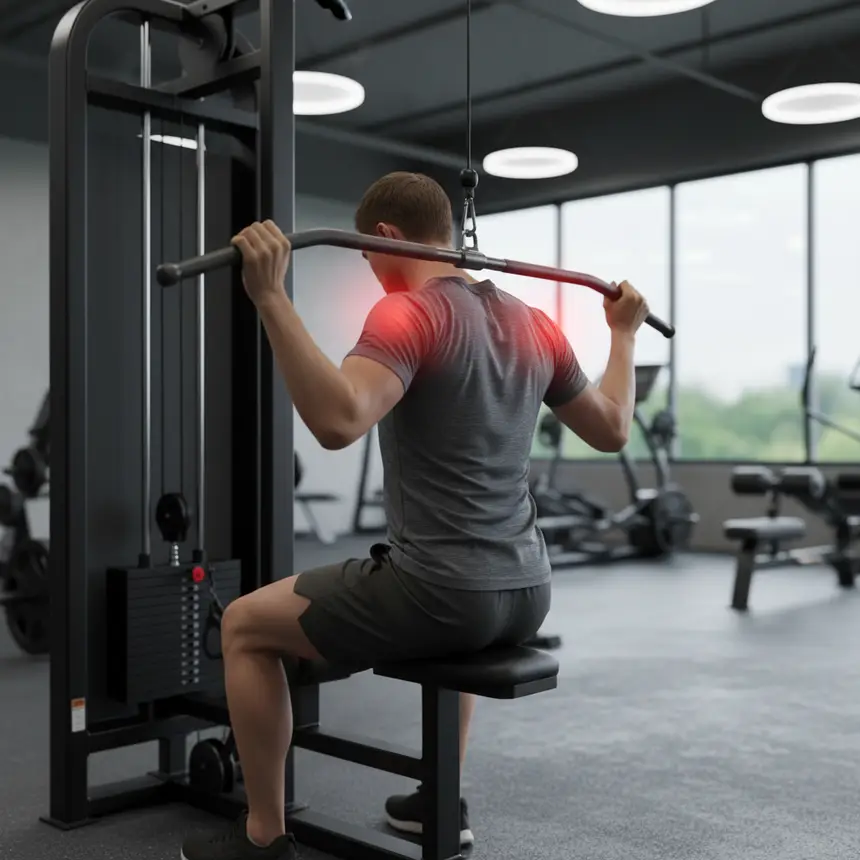
The lat pulldown is a cornerstone exercise for building a broad, strong back. Yet, it's incredibly common for gym-goers to perform this movement and feel it mostly in their arms or shoulders, rather than the target muscle group: the latissimus dorsi, or "lats." If you've been grinding away, trying to build that impressive V-taper, but your lats seem to be playing hide-and-seek, you're not alone. This frustration often stems from subtle but critical form issues. Today, we're diving deep into the secrets of maximizing lat activation during your pulldowns. Get ready to transform your back workout and finally recruit those powerful lats!
The Hidden Reasons Your Lats Aren't Engaging
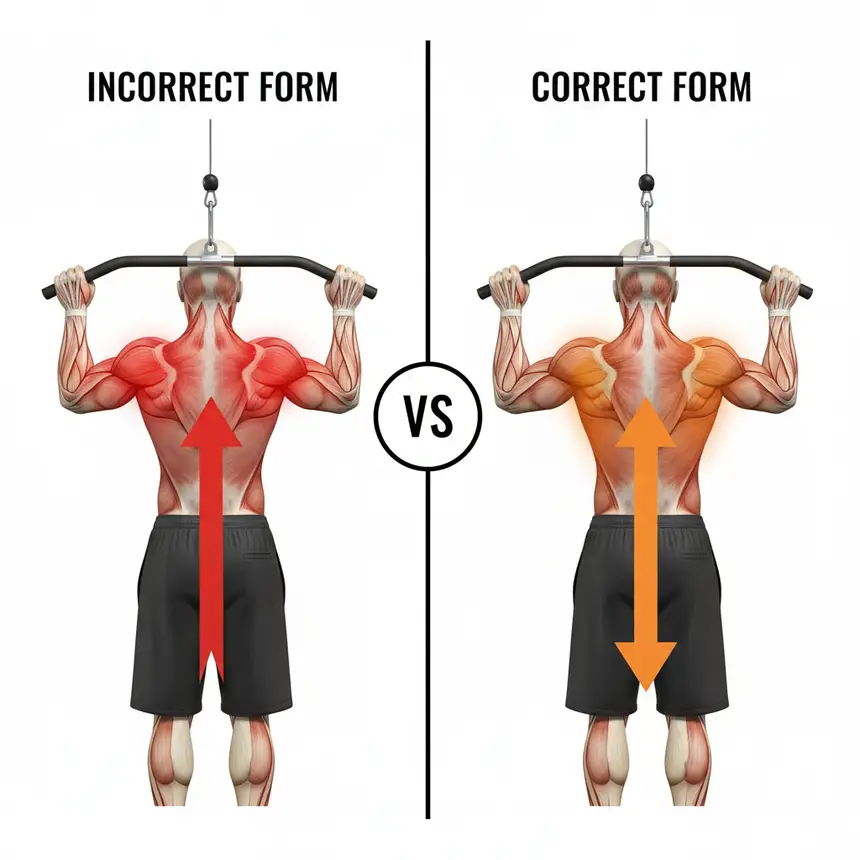
Many of us approach the lat pulldown with a simple mindset: grab the bar, pull it down. However, this overly simplistic approach often leads to excessive recruitment of the biceps, anterior deltoids, and upper traps. The lats are powerful muscles responsible for adducting, extending, and internally rotating the shoulder joint, as well as depressing and downwardly rotating the scapulae. When the crucial movement of your shoulder blades (scapulae) and the rotational alignment of your upper arm bone (glenohumeral external rotation) are overlooked, your lats can't do their job effectively. Think of it like a finely tuned engine where one key component isn't firing – the entire system becomes inefficient. Specifically, if your scapulae don't depress and downwardly rotate correctly, your arms and upper traps will inevitably take over, stealing the work from your lats.
※ This post contains affiliate links. I may earn a commission at no extra cost to you.

Unlocking Your Lats: The Power of External Rotation and Scapular Control
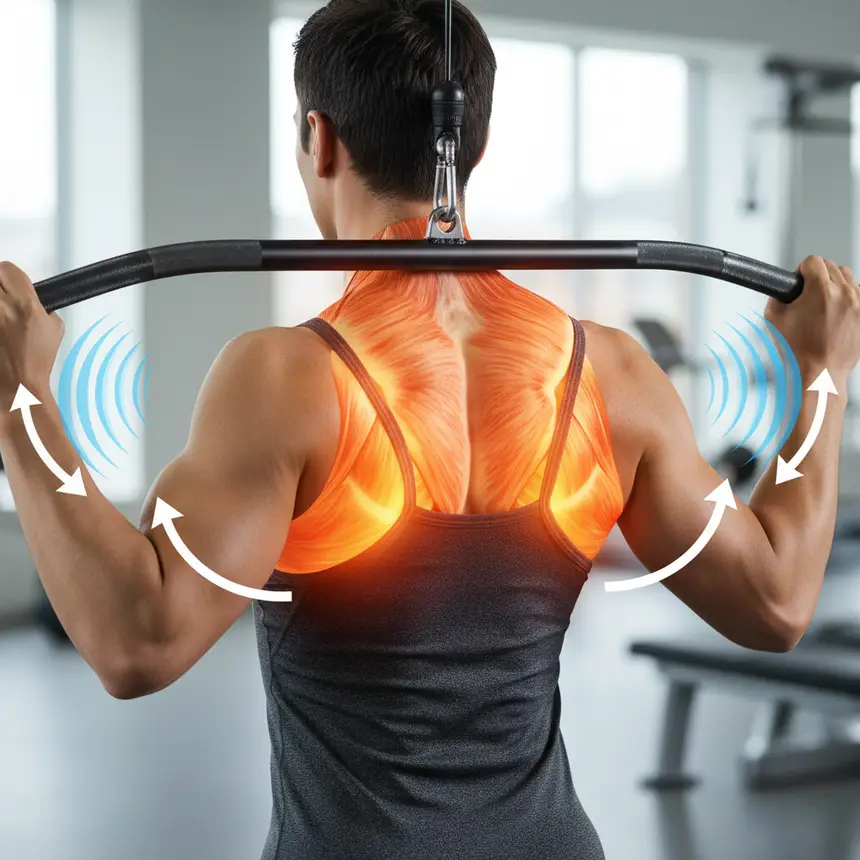
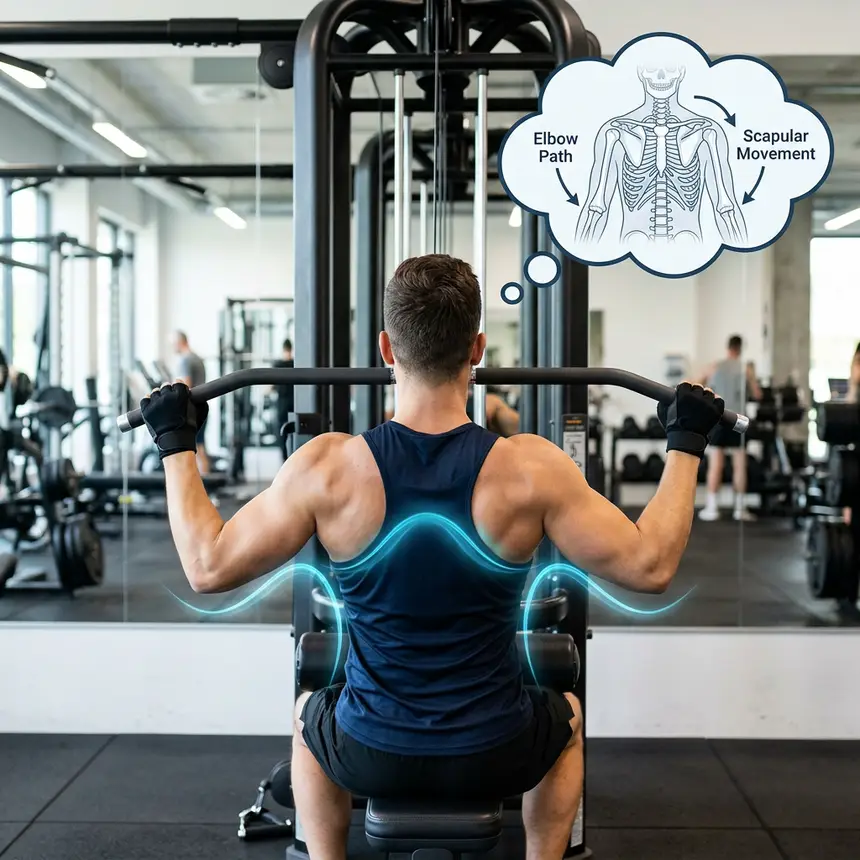
To truly awaken your lats during the pulldown, you must master two fundamental elements: "glenohumeral external rotation" and "active scapular movement." Integrating these techniques will supercharge your lat pulldown effectiveness.
- Setting Up for Success: Sit squarely on the machine, with the bar directly above your head. Maintain a slight arch in your lower back and a subtle lean back in your torso. Before grabbing the bar, gently externally rotate your shoulders by rotating your elbows slightly outward. Simultaneously, allow your shoulder blades to upwardly rotate and protract (move away from your spine and slightly up), creating space for a full overhead stretch. Focus on feeling a connection from your arms through your lats.
- The Pulling Phase: Exhale as you pull the bar down towards your upper chest or collarbone. The key is to initiate this pull not with your arms, but by actively depressing and downwardly rotating your shoulder blades. Feel your lats contracting powerfully as they drive your elbows down and back towards your hips. Your elbows should naturally point towards the floor and move in line with your torso. Aim for your wrists and elbows to be vertically aligned at the bottom of the movement. Imagine pulling with your elbows, not your hands.
- The Releasing Phase: Inhale as you slowly and controllably allow the bar to return to the starting position, resisting the upward pull. Maintain that slight external rotation of your shoulders throughout this eccentric phase. Allow your shoulder blades to upwardly rotate and protract again, feeling a deep stretch in your lats.
Actionable Strategies for Enhanced Lat Engagement
Mastering the precise mechanics of the lat pulldown takes time and consistent practice. These practical tips will help you cultivate that elusive lat connection.
- Prioritize Form Over Weight: Start with lighter loads. Your primary goal is to establish the correct movement pattern and feel the target muscles working, not to lift heavy. The sensory feedback of your lats contracting and stretching is far more valuable than the number on the weight stack.
- Mirror Feedback and Bodyweight Drills: Utilize a mirror to visually confirm your scapular and arm movements. Alternatively, practice the movement with resistance bands or even just your bodyweight to solidify the mind-muscle connection before adding significant load.
- Cultivate the Mind-Muscle Connection: During each repetition, actively visualize your lats doing the work. Imagine your lats are giant wings, and you're trying to fold them down and back into your body. This mental focus can dramatically improve muscle activation.
- Focus on Elbow Drive: Instead of thinking about pulling the bar with your hands, shift your focus to driving your elbows down and back towards your hips. This subtle mental cue can help minimize biceps involvement and maximize lat engagement.

Unleash Your Lat Potential and Build the Back You Desire!
The lat pulldown is more than just a back exercise; it's a powerful tool for sculpting a truly impressive physique. Now, you understand that effective pulldowns aren't about brute force from your arms or shoulders. They're about strategically engaging glenohumeral external rotation to guide your arm path and actively controlling the upward and downward rotation of your scapulae to ignite your lats. Remember the core principle: "With externally rotated arms, allow your shoulder blades to open upwards, then drive them down and back as you pull." Consistent application of these techniques will lead to tangible changes in your back development. Re-evaluate your lat pulldown routine with these newfound insights and embark on your journey to a wider, more powerful back. Persistence is the key to unlocking your full potential!
Frequently Asked Questions
Q. Why can't I feel my lats during lat pulldowns?
A. Often, it's due to insufficient scapular movement and glenohumeral external rotation, causing your arm or shoulder muscles to compensate. The core reason is a lack of proper lat activation.
Q. How can I stop my shoulders and arms from taking over during lat pulldowns?
A. Before you pull, establish external rotation at your shoulders and allow your shoulder blades to upwardly rotate and protract. During the pull, focus on driving your elbows down towards your torso by actively depressing and downwardly rotating your scapulae, rather than pulling with your hands.
Q. Why is glenohumeral external rotation important for lat pulldowns?
A. External rotation helps set the correct path for your arms, allowing your lats to contract more efficiently. It also reduces stress on the shoulder joint and prevents excessive involvement of arm muscles.
Q. How should my shoulder blades move during lat pulldowns?
A. Before pulling, your shoulder blades should be slightly upwardly rotated and protracted. As you pull, they should actively depress and downwardly rotate. When you release, they return to the upwardly rotated and protracted position.
Q. I'm using light weight, but still can't feel my lats. Any tips?
A. Focus intensely on the mind-muscle connection and precise form over weight. Use a mirror to observe your scapular and elbow movements, and practice with bodyweight or resistance bands to establish that muscle connection before increasing load.