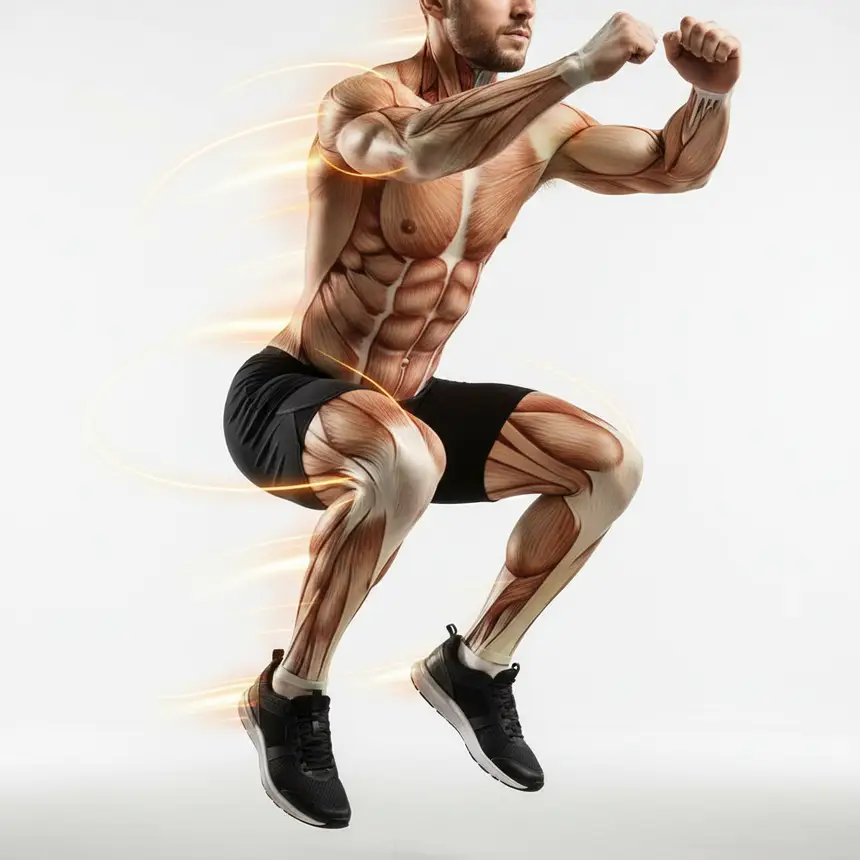
Squats are a core exercise for building full-body strength and core stability. Learn the proper squat form and effective training methods to sculpt a healthier physique. Discover personalized routines and essential precautions to maximize your squat benefits safely.

Squats: More Than Just a Leg Exercise
Squats are a foundational exercise, offering far-reaching benefits beyond simply strengthening your lower body. They are crucial for enhancing overall physical strength, improving core stability, and boosting functional movement in daily life. Engaging major muscle groups like the quadriceps, hamstrings, and glutes, squats demand significant energy expenditure, which helps stimulate metabolism and contribute to improved physical endurance. Regular squat practice also plays a key role in enhancing balance, fortifying the muscles around your spine for better posture, and can be beneficial for long-term bone health. To fully reap the extensive squat benefits, consistent practice and meticulous attention to proper form are paramount.
Master Your Squat: A Step-by-Step Guide to Optimal Form
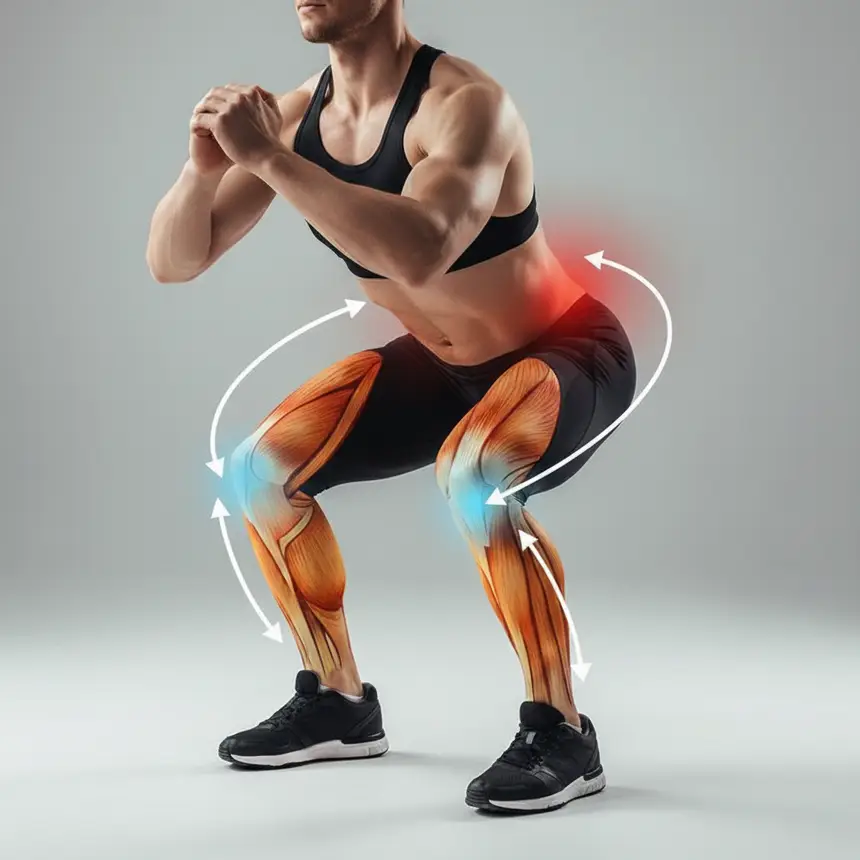
To maximize the effectiveness of squats and minimize the risk of injury, mastering the correct squat form is essential. Begin by positioning your feet slightly wider than shoulder-width, with your toes angled outward by 5-15 degrees. Ensure your entire foot is firmly planted on the ground, creating a stable base. Next, maintain a neutral spine by keeping your back straight and your gaze forward. Inhale as you initiate the movement by pushing your hips back and down, as if you're sitting into a chair. Your knees should track in line with your toes, avoiding any inward collapse or outward flare. Aim to lower until your thighs are parallel to the ground, or even deeper if your mobility allows. Exhale as you drive through your heels to stand back up, consciously engaging your glutes and returning to your starting position. Practicing in front of a mirror or seeking guidance from a fitness professional can significantly help in perfecting your squat technique.
※ This post contains affiliate links. I may earn a commission at no extra cost to you.

Integrating Squats into Your Fitness Journey
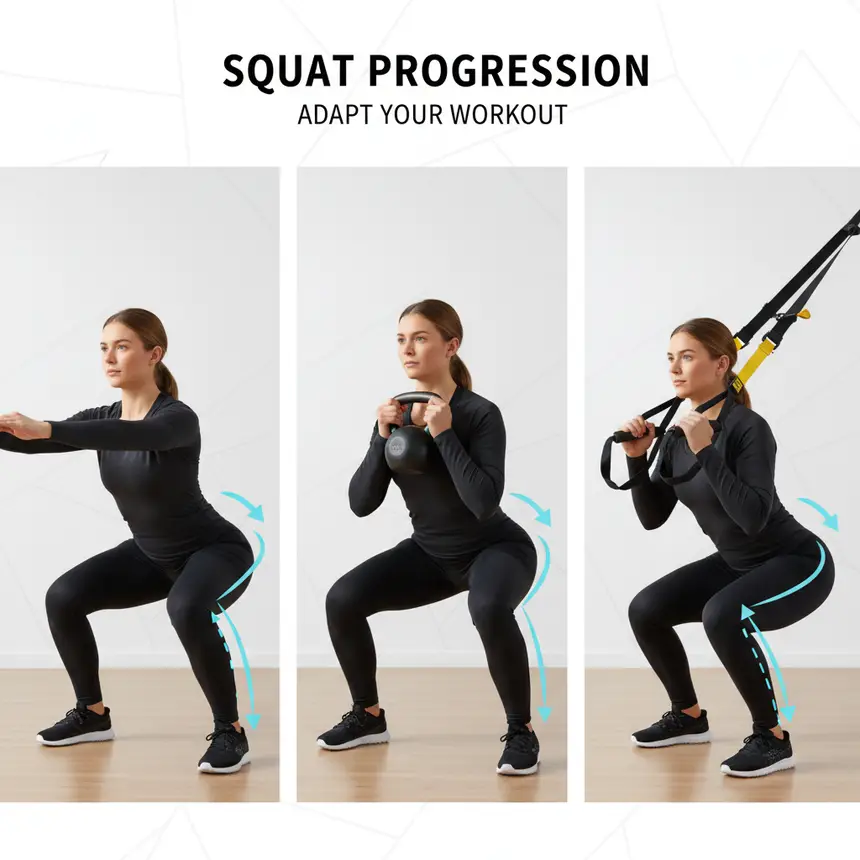
Squat training can be adapted to suit individual fitness levels and goals. For beginners, it's best to start with bodyweight squats, focusing entirely on perfecting your form. Use a mirror to monitor your foot placement, knee alignment, and back posture. As you gain confidence, you can modify the intensity with exercises like wall squats or chair squats. If you experience discomfort in your lower back or knees, consider using support such as a suspension trainer (like TRX) to help maintain balance and reduce strain. A common recommendation is to perform 3 sets of 10-15 repetitions, adjusting based on your stamina. For those ready to add resistance, goblet squats with a dumbbell or kettlebell are an excellent progression. Always include a dynamic warm-up and a cool-down stretch before and after your squat sessions. Even incorporating a short 5-minute bodyweight squat routine daily can significantly contribute to improved lower body strength.
Key Considerations for Effective and Safe Squatting
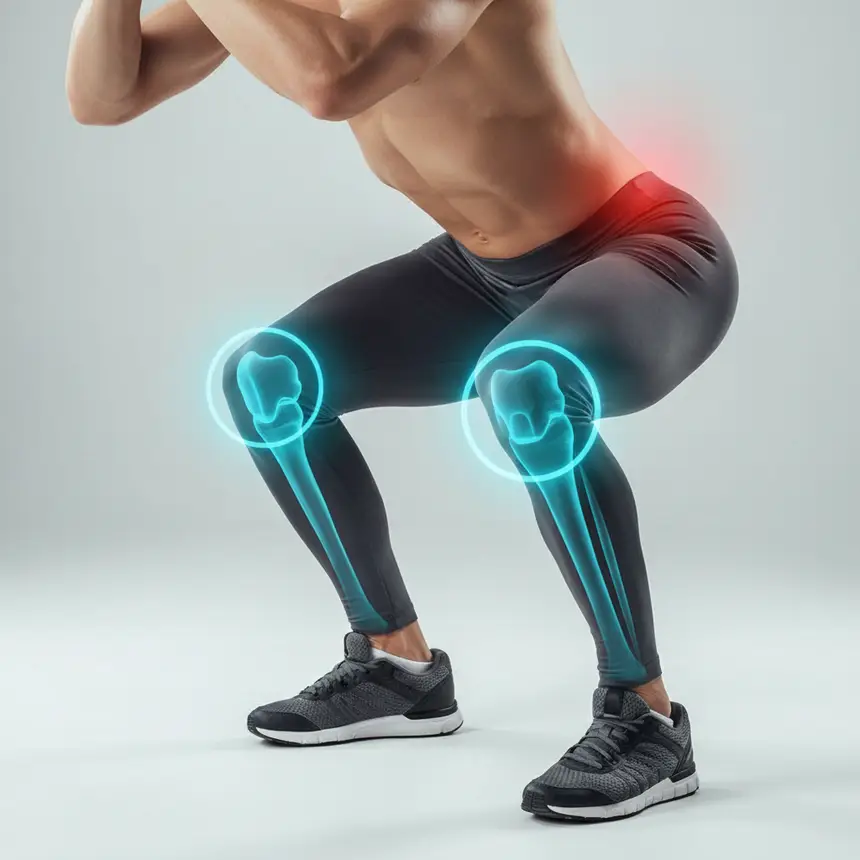
While squats are incredibly effective, adhering to a few precautions ensures a safer and more beneficial workout. If you experience any pain in your knees or lower back, immediately stop the exercise and reassess your form. Individuals with pre-existing joint or back issues should consult with a professional to find appropriate squat modifications and intensity levels. For instance, using a chair for support or performing wall squats can reduce load on the joints. Always prioritize controlled, deliberate movements over speed and only squat within a pain-free range of motion. Squats are highly recommended for individuals of all ages and fitness levels aiming for general health improvement. They are particularly beneficial for athletes seeking to enhance lower body power and core stability, older adults looking to maintain mobility and prevent falls, and anyone desiring better posture and overall body balance. Understanding your physical limits and gradually increasing intensity is key to a successful squat regimen.
Frequently Asked Questions
Q. Is it okay for my knees to go past my toes when I squat?
A. The common advice is to keep knees behind toes, but this isn't a strict rule for everyone. Depending on ankle mobility and individual anatomy, your knees might naturally extend past your toes. The crucial aspects are that your knees track in line with your feet, your weight is distributed evenly across your entire foot, and you don't experience any pain. If it feels natural and pain-free, it's generally fine.
Q. Can I still squat if I have lower back pain?
A. Yes, but with caution and modification. It's vital to focus on perfect form and choose variations that minimize strain on your back. Bodyweight squats using a chair for support or suspension trainers can be good starting points. If you feel any pain, stop immediately and consider consulting a healthcare provider or a certified personal trainer to find a safe and effective approach tailored to your condition.
Q. How often should I squat for the best results?
A. While light bodyweight squats or mobility-focused squats can be done daily, high-intensity squatting with weights requires muscle recovery time. For optimal muscle growth and injury prevention, it's generally recommended to perform challenging squat workouts 2-3 times per week, allowing for adequate rest days in between. Listen to your body and adjust frequency based on your recovery.
Q. What's the correct breathing technique for squats?
A. The typical breathing pattern for squats is to inhale as you descend (eccentric phase) and exhale as you ascend (concentric phase). It's important to brace your core by taking a deep breath and holding it briefly at the bottom of the squat to enhance spinal stability, then exhaling as you push up. Avoid holding your breath for too long, especially during heavy lifts.
Q. Are there different types of squats I should try?
A. Absolutely! Beyond the basic bodyweight squat, there are many variations. These include goblet squats, barbell back squats, front squats, and overhead squats for adding resistance. You can also vary your stance with wide (sumo) squats or narrow stance squats to target different muscle groups. Single-leg variations like Bulgarian split squats are great for addressing muscular imbalances and improving stability.