Boost your core and lower body with just 20 minutes a day! This guide covers crunches and cross lunges, offering detailed instructions, proper form tips, and essential advice for an effective and safe workout routine.

Unlock Powerful Results with a 20-Minute Workout: Efficient Core and Lower Body Strengthening
For anyone juggling a busy schedule but still aspiring to a healthier, stronger body, a short yet intense workout can be incredibly effective. You might wonder if just 20 minutes a day can truly make a difference, but with the right approach, it absolutely can. The key lies in maximizing efficiency, focusing on activating major muscle groups and enhancing overall body stability within that limited timeframe. Your core and lower body muscles form the foundation of all physical activity; targeting these areas rigorously can significantly boost your general fitness and contribute to fat burning. While individual results vary, a 20-minute session can burn approximately 120-180 calories for someone weighing around 120-130 lbs. Today's featured exercises, crunches and cross lunges, are an optimal combination designed to make your body more toned and vibrant, even in a short burst.
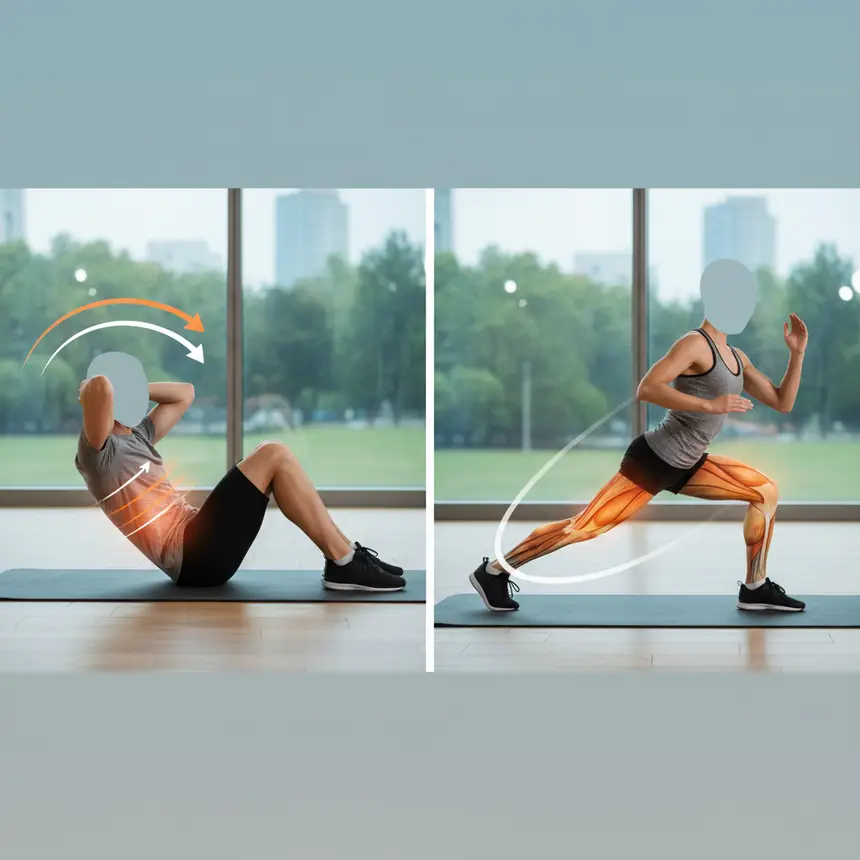
Mastering the Moves: Your Complete Guide to Crunches and Cross Lunges
Achieving an efficient 20-minute workout routine hinges on executing each exercise with precise form. Incorrect technique not only diminishes the exercise's effectiveness but can also lead to unnecessary strain and discomfort. Follow this guide closely to understand the core principles of each movement and perform them correctly.
Perfecting Your Crunches for Stronger Abs
Crunches are excellent for directly engaging your rectus abdominis, strengthening your core. Aim for 4 sets of 15 repetitions, allowing for a 30-second rest period between each set. Focus on a controlled movement, taking 2 seconds to lift and 3 seconds to lower, to maintain continuous muscle tension.
1. Lie flat on your back with your knees bent, feet flat on the floor.
2. Engage your abdominal muscles to press your lower back firmly against the floor, preventing it from arching. Lifting your legs to a 90-degree angle can also help stabilize your lower back.
3. Gently place your fingertips near your ears or cross your arms over your chest. (Avoid pulling on your neck.)
4. Using only your core strength, lift your upper body, concentrating on bringing your rib cage closer to your belly button. Make sure not to jerk your neck or pull your head forward.
5. Exhale as you lift your torso and inhale slowly as you lower back down.
Enhancing Balance and Lower Body Strength with Cross Lunges
Cross lunges demand greater core engagement than traditional lunges, simultaneously strengthening your glutes and overall lower body. Perform 4 sets of 12 repetitions, resting for 30 seconds between sets.
1. Start by standing tall. Step one foot diagonally behind the other, as if you're doing a curtsy or skating. Your feet should cross over.
2. Keep your hips squared forward and maintain a slight forward lean with your upper body.
3. Lower your body by bending both knees until your back knee is just above the floor. Ensure your front knee doesn't extend past your toes.
4. Push through the heel of your front foot to return to the starting position. Feel the engagement in your glutes and hamstrings.
5. Keep your core tight to maintain a stable torso throughout the movement. Pay attention to keeping your knees aligned and preventing them from collapsing inward or outward.
6. Inhale as you lower down and exhale as you push back up.
Perfecting Your Crunches for Stronger Abs
Crunches are excellent for directly engaging your rectus abdominis, strengthening your core. Aim for 4 sets of 15 repetitions, allowing for a 30-second rest period between each set. Focus on a controlled movement, taking 2 seconds to lift and 3 seconds to lower, to maintain continuous muscle tension.
1. Lie flat on your back with your knees bent, feet flat on the floor.
2. Engage your abdominal muscles to press your lower back firmly against the floor, preventing it from arching. Lifting your legs to a 90-degree angle can also help stabilize your lower back.
3. Gently place your fingertips near your ears or cross your arms over your chest. (Avoid pulling on your neck.)
4. Using only your core strength, lift your upper body, concentrating on bringing your rib cage closer to your belly button. Make sure not to jerk your neck or pull your head forward.
5. Exhale as you lift your torso and inhale slowly as you lower back down.
Enhancing Balance and Lower Body Strength with Cross Lunges
Cross lunges demand greater core engagement than traditional lunges, simultaneously strengthening your glutes and overall lower body. Perform 4 sets of 12 repetitions, resting for 30 seconds between sets.
1. Start by standing tall. Step one foot diagonally behind the other, as if you're doing a curtsy or skating. Your feet should cross over.
2. Keep your hips squared forward and maintain a slight forward lean with your upper body.
3. Lower your body by bending both knees until your back knee is just above the floor. Ensure your front knee doesn't extend past your toes.
4. Push through the heel of your front foot to return to the starting position. Feel the engagement in your glutes and hamstrings.
5. Keep your core tight to maintain a stable torso throughout the movement. Pay attention to keeping your knees aligned and preventing them from collapsing inward or outward.
6. Inhale as you lower down and exhale as you push back up.
※ This post contains affiliate links. I may earn a commission at no extra cost to you.

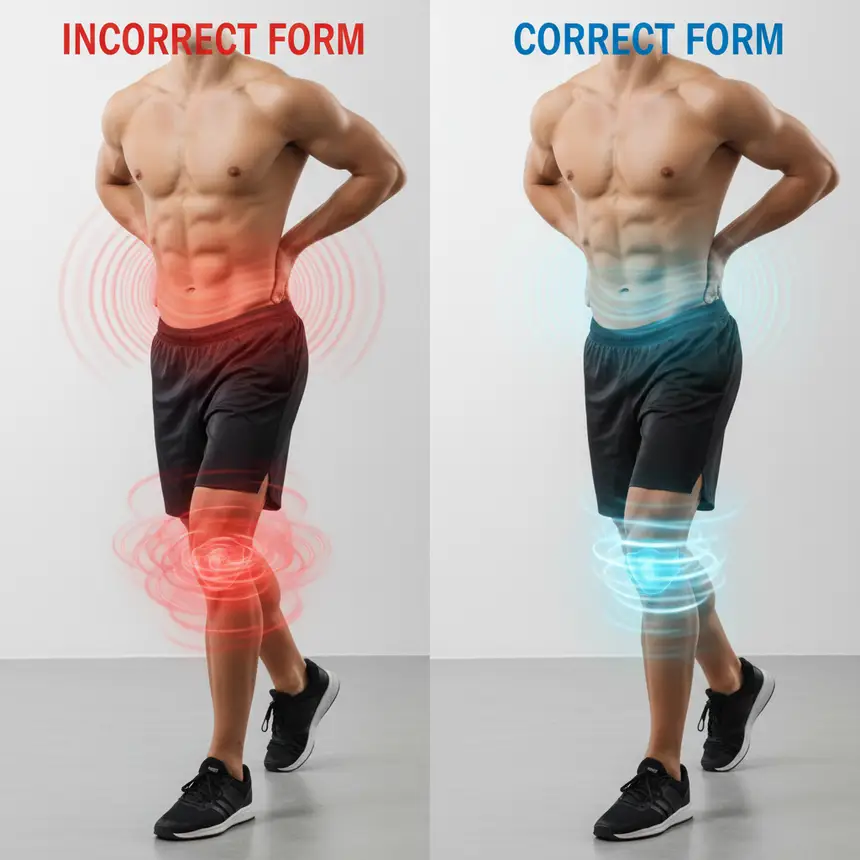
Essential Tips for Safe and Effective Workouts and Who Will Benefit Most
As with any exercise, understanding proper form and precautions for crunches and cross lunges is crucial. You want to maximize your results through efficient training while minimizing the risk of injury.
Avoiding Common Mistakes and Preventing Injury
Who This Routine is Especially Recommended For
Consistency is the most vital aspect of any exercise program. Integrate this 20-minute routine into your daily life and experience the healthy, invigorating changes it can bring.
Avoiding Common Mistakes and Preventing Injury
- Pulling on Your Neck During Crunches: A frequent error is using neck strength instead of core strength to lift your upper body. This can lead to unnecessary neck strain and pain. Focus on contracting your abs and use your hands merely to support your head, not pull it.
- Arching Your Lower Back: If your lower back lifts off the floor during crunches, core engagement decreases, and your lower back can become strained. It's vital to engage your lower abs to keep your entire lower back pressed against the floor.
- Knee Instability in Cross Lunges: If your knee wobbles inward, outward, or pushes too far forward, it can stress your joints. Use a mirror to ensure your knee tracks in line with your toes, and always strive to control the movement. Start with a shallower depth if needed and gradually increase as you gain strength.
- Excessive Torso Rotation: Over-rotating your torso in the direction of your trailing leg during cross lunges can compromise core stability and strain your lower back. Keep your hips and upper body facing forward as much as possible, limiting torso movement.
Who This Routine is Especially Recommended For
- Individuals with Limited Time: If your schedule is packed, this 20-minute routine effectively targets key muscle groups.
- Beginners and Those Building a Habit: The exercises are relatively straightforward to learn, and the short duration makes consistency easier to maintain.
- Those Aiming for Stronger Core and Lower Body Stability: Both exercises are highly focused on activating these crucial muscle groups.
- Anyone Looking to Improve Overall Fitness and Support Moderate Fat Burning: Consistent practice will boost your body's energy expenditure and enhance overall physical conditioning.
Consistency is the most vital aspect of any exercise program. Integrate this 20-minute routine into your daily life and experience the healthy, invigorating changes it can bring.
Frequently Asked Questions
Q. Can a 20-minute workout truly be effective?
A. Absolutely! The key lies in the intensity and efficiency of your workout. Performing compound exercises like crunches and cross lunges with correct form and focus within a short period can effectively strengthen muscles and contribute to calorie expenditure.
Q. What should I do if I feel neck pain during crunches?
A. Neck pain during crunches often comes from pulling your neck excessively due to insufficient core strength. Try placing your fingertips lightly at your temples or crossing your arms over your chest to reduce neck strain. Focus on initiating the movement from your abdominal muscles, and if necessary, reduce your range of motion until your core strength improves.
Q. How can I avoid knee discomfort during cross lunges?
A. If you feel knee discomfort, first check your form. Ensure your knee doesn't extend past your toes and that it tracks in line with your foot, avoiding any inward or outward collapse. Adjust the depth of your lunge to a comfortable range and gradually increase it as you gain strength. Maintaining a strong core throughout the exercise is also crucial for lower body stability.
Q. Is it okay to do this routine every day?
A. While daily exercise can help build consistency, it's generally recommended to allow for 1-2 rest days per week or engage in lighter activities to allow your muscles to recover. If you experience significant muscle soreness, adequate rest is particularly important. Beginners might find starting every other day beneficial for adaptation.
Q. Are pre and post-workout stretches necessary?
A. Pre-workout dynamic stretches can help activate muscles and prevent injury. Post-workout static stretches are beneficial for relaxing muscles and improving flexibility. While not strictly mandatory, incorporating them can enhance workout effectiveness and overall body well-being.